
 By Marissa Bader
I have been living with the ache of loss for so long that I truly don’t remember what it feels like not to carry it.
Sometimes it rests quietly beneath my ribs, dormant and almost polite. Other times it rises without warning—on an ordinary Tuesday afternoon, in the middle of a coffee line—and cuts straight through me.
Today, it was a song.
I was waiting for my coffee when “Pictures of You” by The Cure drifted through the café speakers. I hadn’t heard it in 20 years. In my twenties, it meant heartbreak—young love unraveling, relationships ending before they were ready. Back then, the ache felt dramatic and temporary.
But today, the first line landed differently:
I’ve been looking so long at these pictures of you
that I almost believe that they’re real.
My eyes filled instantly.
Because this is my life now.
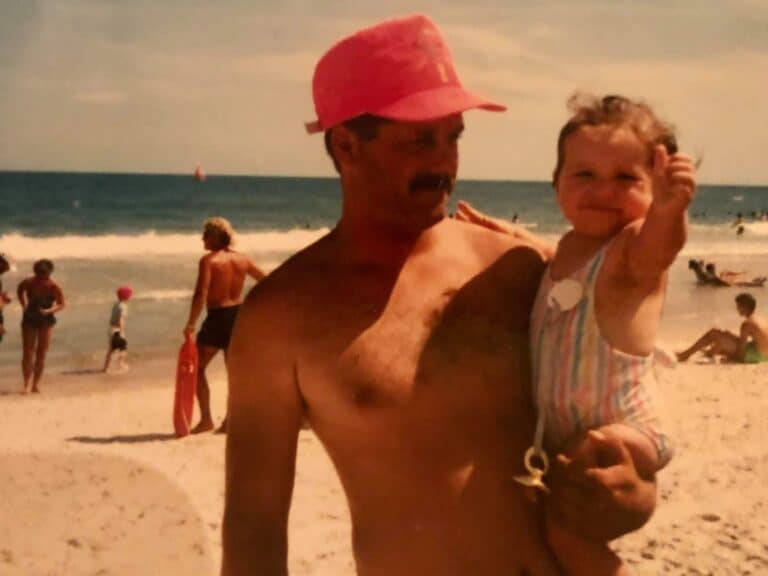
I look at pictures of my parents every day. They sit framed in my bedroom and in my office. I talk to them sometimes. I ask their advice. I study their faces as if, by concentrating hard enough, I might coax them back into motion.
These photographs are what remain of our relationship.
If I close my eyes, I can sometimes still remember the way my dad’s cologne smelled, or the exact pressure of my mom’s hug. But there are days when the sensory details slip just out of reach. And when that happens, a terrifying and painful thought creeps in:
Were they really here? Did I actually have them? Or have I been living without them for so long that my memories are starting to feel imagined?
That may be the cruelest part of long-term grief: not just the absence, but the feeling that they–and my childhood–may never have even been real.
I took them for granted. Even knowing, from a young age, that I would not have them forever, I assumed there would be more time. More conversations. More affection. More chances to say what mattered.
There are so many things I wish I’d said. So many decisions I would have made differently. So many hugs I wish I’d held longer.
And yet, isn’t that how it always is? We never know which regular day will become the last one.
Most days, I seem fine. I show up. I mother. I write. I cheer at games and help with homework. I am loving and capable.
But underneath it all, there is a hollow.
A steady, quiet hollow.
I feel like a branch swinging without the tree that once anchored it. The base that steadied me is gone. Over time, other pieces have fallen away too—childhood homes sold, memories thinning at the edges. It is astonishing how much can disappear in one lifetime.
I miss having parents.
I miss the experience of being someone’s child. Of feeling wholly accepted by the people who knew you from the beginning. Of having a place to land without explanation.
I miss them at my children’s games and dance recitals the most. I sit on the bleachers and watch other women lean toward their mothers, sharing commentary and laughter. I imagine my mom beside me, analyzing every play. She would have loved the noise and the movement and the thrill of it all. She was such a competitor.
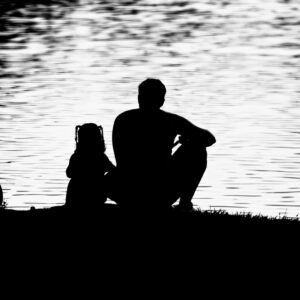
My dad would have taught my kids how to fish and waterski. He would have shown them how to be steady, kind humans in a loud world.
Instead, I sit alone in the quiet ache of what should have been.
Sometimes I feel everything at once and want to cry until there is nothing left in me. Other times I feel almost nothing at all, a numbness that is easier to carry but just as heavy.
I don’t always feel joy the way I used to. I don’t get as excited. I move through many days on muscle memory alone. From the outside, I’m functioning beautifully.
Inside, I am still looking at pictures.
Maybe this is what it means to live with loss that settles into your bones—not the sharpness of early grief, but the long, slow ache of living life without the people who formed you.
At the end of the day, I’m just grateful I ever had their love at all.
I will keep looking at the pictures, and I will carry them with me forever, knowing that the steady ache of loss won’t ever dissipate.


 by Chelsey McCarthy
 by Amber Watson
 by Liz Newman
 by Sue Volikas
 by Hannah Fellows