


If you have lost an elderly parent, I bet people have said to you “at least he/she lived a good, long life” or “you were so lucky to have had him/her for so long.” You probably have even said this to yourself in an attempt to justify the event and diminish your grief, along with “it was a blessing” if they were suffering.
I recently lost my dad. He was almost 88 years old, and I was almost 59. We had a very close and special relationship. I have no doubt the above statements that others tell us (and we tell ourselves) are true, and I imagine dealing with the tragic loss of a younger parent who should have had so much more life to live is even more difficult to deal with. Nevertheless, our grief still runs very deep.
My dad’s health had been mysteriously declining for a couple of years, and right after he died, I tried to tell myself the above statements, erroneously thinking it might keep my grief from becoming overwhelming. My other problem, though, was that others were also saying these things to me. While it was likely well-intentioned, it made me feel unentitled to the deepest sadness I’ve ever felt in my life that was downright physically painful.
I felt I was expected to bounce back quicker because he “lived a long life.” I went back to work after four days and strived to appear okay. I think I was successful for the most part. I’m sure it’s natural for anyone who has had a loss to want to keep the darkest times of grief private; however, I actually felt embarrassed and a bit ashamed about the depth of my grief due to the circumstances. Was it irrational of me to feel that way? Perhaps, but that’s how I felt.
Before I lost a parent, I’m sure I was guilty of assuming someone who lost an elderly parent likely has an easier time emotionally than if they had tragically lost a young parent. That may very well be true, but I didn’t realize just how incredibly sad and lost I could feel despite the circumstances. After all, I had my dad since my birth to almost 59 years of age. Part of me thought (and still thinks) what now? How do I do this without him? He’s always been there and now, suddenly, I can’t ask his advice, share my joy of an event, or enjoy his incredibly humorous nature.
Some of you have had to deal with the tough decision of placing your parent in a nursing home or selflessly becoming their primary caregiver and witnessing the decline every minute. You may also be dealing with your surviving parent who needs extra help now, and you must push your own grief aside. I’m sure for many of you this is also the loss of your second parent, and for that, my heart truly goes out to you. I am very fortunate that my mom is still strong, energetic, and full of life.
Since I’ve now had the misfortune of experiencing how it feels to lose a parent, talking to others has taught me that a parent’s advanced age, with or without health complications, does not necessarily diminish the grief one feels, and that’s perfectly okay. In addition, I have chosen not to get wrapped up in the “five stages of grief.” It is what it is, and I feel how I feel. I believe we all will make progress in our own way and in our own time.
I realize now I shouldn’t feel embarrassed about the magnitude of grief I’ve endured, even though my dad lived a good long life, I was lucky to have him so long, and that his death was a blessing. I know I will never completely get over this loss, but I now see my grief for what it really is—an absolute deep and never-ending love for my dad—and that could never be a bad thing.
Next year, I’ll be 60, and I have a goal to become as strong and physically fit as I can. I don’t expect this to diminish my sadness; however, I know in my heart that my dad would be thrilled that I persevered to achieve a goal I have. I can hear him now, “I’m so proud of you! Now go live a happy life and always keep your sense of humor!” Guess what? That’s just what I plan to do. I hope you’ll do the same.

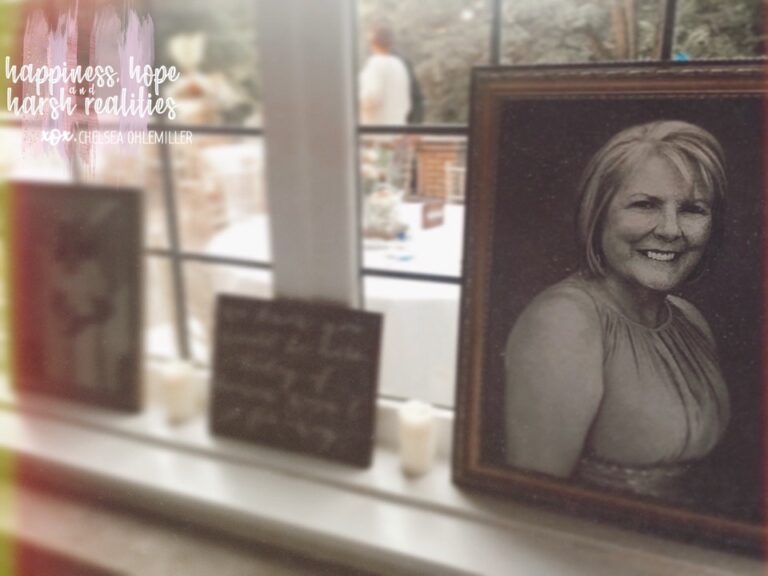
 by Chelsea Ohlemiller
 by Liz Newman
 by Danielle Lacourse Vaughn