

 By Amy Becker
When our son started kindergarten, he was a bundle of energy. He was whip-smart, talked early, and learned to read when he was three. He also liked repetition, playing imaginative games by himself, and would wave his arms when he got upset. One thing he particularly hated was coloring, especially inside the solid lines. He was a bit rambunctious and unfocused, but he was our first child, and we thought this was all pretty ordinary.
Our son loved to talk with new people and sought out relationships. He didn’t enjoy sports or running or climbing on the playground equipment much, but he loved imaginative games and intricate mechanical and building projects. We didn’t see his struggles.
Throughout his elementary school years, our son thrived academically and was a great rule follower. He acted awkwardly in some social situations with people his age, so we worked with him to devise ways to interact with his friends that felt comfortable and satisfying to him. We didn’t realize until much later just how hard these relationships were for him to form.
We were very hands-on parents. We researched ways to help him adapt. But in our dealings with his teachers and school administrators, there always seemed to be something left unsaid, like there was an elephant in the room we didn’t know about. But we were certain he wasn’t autistic because rather than shying away from interaction, he sought it out and felt happy doing it.
When our son was 11, we saw a story on the news about what was then called Asperger’s syndrome, and things clicked into place. The story described our son to a tee. Children who experience this seek relationships with peers but have difficulty connecting and relating to them. They often reject physical activities for more imaginative pursuits. They struggle with sensory overload, love to engage in repetitive activities, and will wave their arms or perform other stimming acts to soothe their anxiety. We felt like we had finally unlocked the puzzle that was our son’s behavior.
As the psychiatrist explained when we confirmed the diagnosis, the techniques we’d been teaching him to help him stretch his boundaries and explore new ways of dealing with anxious situations were actually coping skills for autistic children. These became strengths for him.
Having a diagnosis felt like a key to unlocking the why of our son’s unique approach to life. This informed diagnosis opened doors to ways he could thrive even more. It wasn’t solid lines on a coloring page, but the scribbles that extended beyond them made him the unique and joyful person he’s always been.
Our son’s childhood fascination with insects grew into a love of science that he has turned into a successful career as a high school teacher. He makes science fun for his students and makes it come alive. His strong imagination led to a love for role-playing board games where he creates elaborate character studies and builds worlds from nothing.
Being on the autism spectrum has shaped our son, forming him into a man with character and strength and struggles of his own. If we had understood the why of his approach to life earlier, we may have learned other strategies to help him adjust to a world that didn’t always understand him. In the end, we did the best we could with what we did know, and that’s really all you can do as a parent.


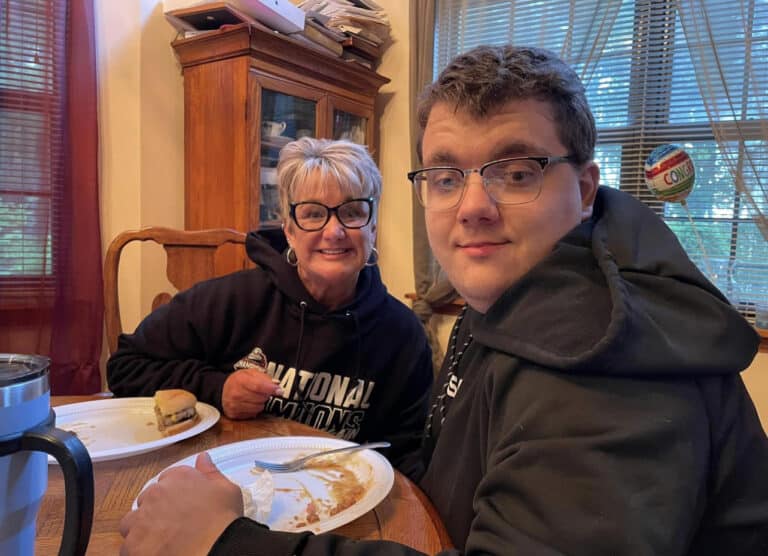




 by Katie Maguire