

For 30 years, Thanksgiving was a wound I didn’t know how to stop reopening.
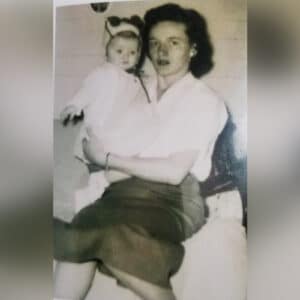
It wasn’t the turkey or the stuffing or the pumpkin spice—I never cared for those things anyway. It was the ache of being unwanted. The woman who gave birth to me would often choose to spend Thanksgiving with her family in Iowa. She lived in Kentucky, and I lived in Nebraska, so I seldom saw her. Technically, she was supposed to have me every other weekend and holiday. But technicalities don’t mean much when someone doesn’t want you. She didn’t even want to talk to me directly—my sister was the go-between, like a translator for a language she refused to learn.
Year after year, I’d hope. I’d believe maybe this time, she’d changed. Maybe this time, she wanted me. But the pattern never broke. She’d kick me out of her car in a parking lot. She’d give me something that made me break out in hives and vomit. She’d show me scary movies. She’d promise to pick me up and never show. And when I cried, Daddy would take me to a movie and buy me ice cream, trying to patch up the pieces she’d left behind.
Eventually, Thanksgiving became synonymous with disappointment. I stopped expecting anything good from it. I worked every Thanksgiving as a CNA, grateful for the holiday pay and the excuse to avoid the day altogether.
But then something shifted.
I was working in a group home, caring for nine teenage girls with behavioral challenges. One year, I casually mentioned I didn’t mind working Thanksgiving so someone else could be with their family. The girls noticed. They asked why I was “weird” about the holiday. I brushed it off. But one girl—my favorite—suggested something that stuck: “Why not make new memories with new traditions?”
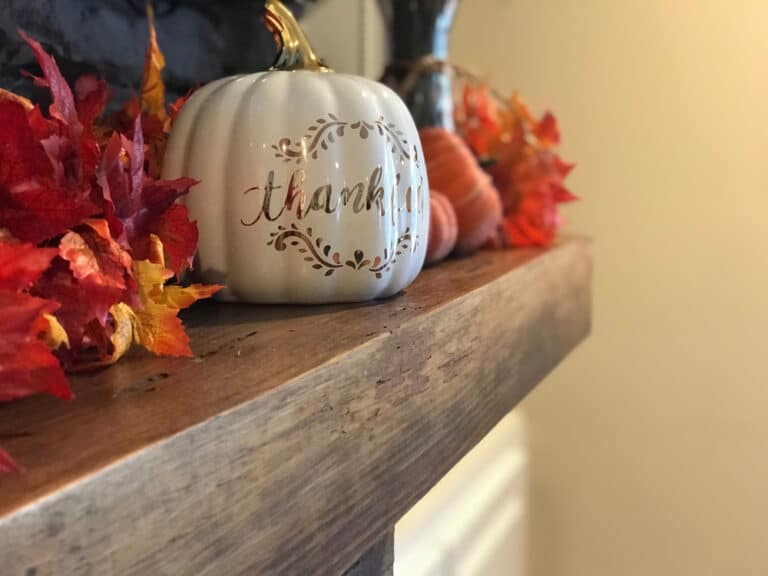
That Thanksgiving, I ate cheese pizza and wandered into Hobby Lobby for reasons I can’t remember. That’s when I saw the ceramic pumpkins. One large white and gold pumpkin that said Welcome. Three smaller ones that read Thankful, Grateful, and Blessed. I had never decorated for Thanksgiving. But something about those pumpkins called to me.
I brought them home. Set them out. And something shifted.
Warmth. Peace. A sense of possibility.
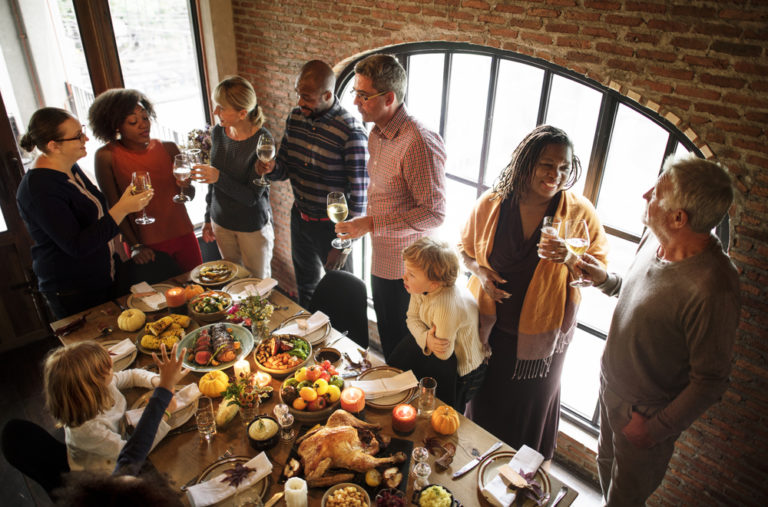
The next year, I put them out again. Same feeling. And slowly, Thanksgiving began to change. I helped cook. I watched the parade. I went Black Friday shopping and saw the prettiest sunset. I spent time with family. I delivered smoked turkey with my father to my sister and her ICU coworkers. I help decorate the Christmas tree.
Eventually, I forgave her, the woman who gave birth to me. She was in the ICU, possibly dying. And I let go—not for her, but for me. I stopped carrying the weight of her rejection. That was her burden, not mine.
Now, Thanksgiving is filled with joy.
And every year, I pull out those pumpkins. They’re like little cheerleaders, reminding me how far I’ve come.
The woman who gave birth to me lives alone. No husband. No children. No grandchildren. She threw away everyone she was supposed to love. For years, I punished myself for her choices. Not anymore.
Now, I choose joy.
Maybe someday, I’ll be a little old lady deciding who to pass those pumpkins down to. Maybe they’ll help someone else too.


 by Christine Leeb
 by Lauren Benson