
 By Kristyna Moore
As children of the ’80s, we grew up in a culture of suppressing feelings and keeping up appearances. We didn’t learn much about the realities of growing older as a woman because, let’s be honest, women were shamed in the tabloids the moment they dared to “show their age.” From birth, we consumed impossible beauty standards, ranging from Kate Moss and the “heroin chic” aesthetic of the ’90s to Britney Spears and Christina Aguilera with their defined abs and precariously low-rise jeans in the 2000s. It’s no surprise that when our generation became adults and mothers, we had a few things to untangle.
At 39, with two young kids to raise, I found myself in the throes of perimenopause. I no longer felt connected to or in control of my body. I became a spectator in my own life, watching helplessly as I slipped into a dark hole I couldn’t climb out of.
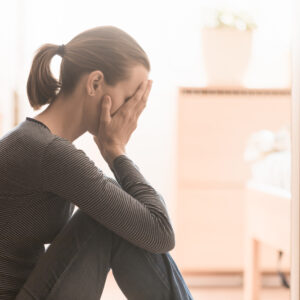
It’s terrifying when you can’t regulate your emotions. I bounced between sobbing in the shower for reasons I couldn’t identify and snapping with a hair-trigger temper. The tiniest things would set off an immediate, overblown reaction, usually aimed at the innocent people in my home whom I love with every fiber of my being. This was usually followed by relentlessly beating myself up for said outburst and convincing myself I was the worst mother, wife, and person on the planet.
As someone who has always struggled with self-image and confidence, watching my body change and age was incredibly triggering. Most days, I was in so much pain that simply getting out of bed felt like an accomplishment, and when your cycles seem to be playing the worst version of peekaboo, it’s mentally and physically exhausting. I just wanted to shut the world out—so I did. I’d come home from work, make dinner, and then retreat to bed with the lights off, tuning everyone out until it was time to put the kids to sleep. I did this every night for weeks, barely speaking to my husband or children.
I knew I would never harm myself, but my thoughts grew dark enough that I felt like if something happened to me, my family would be better off without me. One night, as I lay in my dark room, my husband came in and lay beside me. With tears in his eyes, he said he felt like he was losing me and didn’t know what was wrong or how to help. I broke down and told him everything—what I had been feeling, the darkness that had been creeping in. Unsurprisingly, because he is one of the most incredible men I’ve ever known, his response was free of judgment. He met me with pure love, concern, and the reassurance that I didn’t have to navigate this alone. He reminded me he was there to walk beside me as I tried to understand a body that felt more foreign with each passing day. Knowing that nature has always been our therapy, we made plans for our first soccer-free Saturday the day before Easter to go on a family hike to clear our heads and take a pause from our busy lives. It was a glimmer of something to look forward to in the coming weeks.
I knew I couldn’t keep going like this. Nothing changes if nothing changes, and I loved my husband and kids far too much to give up. I made an appointment with my OBGYN and cried as I tried to explain everything I had been experiencing since my last appointment. I started new medications that helped to regulate my body. I created a “40 before 40” bucket list so I had more small glimmers to reach for. I bought a walking pad for my office and began moving again. Feeling my body grow stronger motivated me to return to spinning. Slowly, I started clawing my way out of that hole, with my husband cheering me on every step of the way.
So, this is a reminder to our generation: an aging body is normal. It’s nothing to hide or feel ashamed of. It means we are still here, still breathing, still living. Don’t be afraid to ask for help. The people who love you want you to feel healthy and whole. Share your experiences so other women don’t have to feel shame in bodies doing exactly what normal bodies do. Share so the girls behind us can enter this stage with open eyes instead of confusion or fear. Share so our sons can one day become the husbands who walk beside their partners with the same steady, loving concern that saved me.
Breaking unhealthy cycles is one of the greatest gifts we can give ourselves – and our children.


 by Bethany Sarazen

 by Keri Forsythe-Stephens