
A Gift for Mom! 🤍
Kids have feelings.
Big feelings. Messy feelings. Intense, complicated, hard feelings. Anyone who’s ever spent time with a crying baby or a screaming toddler or an angry teenager can attest to the fact that kids definitely come into this world pre-programmed with a wide range of feelings.
In the time I’ve spent as an educator and a parent, I’ve come to believe that most of what society teaches children about “feelings” is indirect and unintentional. I know when it comes to my own children I have confronted more than one temper tantrum with the message, “Stop it.” And more than one tearful little face with the message, “Don’t be sad.”
I don’t mean to tell my kids not to feel things. But that’s how it comes out. Because feelings are hard.
Still, when children are inadvertently taught that some feelings are bad or messy or dangerous, they come to believe that they shouldn’t feel those things. Feeling anger becomes dangerous. Feeling sadness becomes failure.
This is a dangerous message. Because it leads people to believe that they should control their feelings. That it’s better not to feel. Phrases like “happiness is a choice” carry the underlying message that you can and should be in control of your feelings. Because why would anyone “choose” to be sad? It leads us to believe that if we are not happy then we are not in control.
I spent many years of my life trying to control my “dangerous” feelings like anger and sadness. And it didn’t work. In fact, it only made me feel worse. Because it made me feel like, if I wasn’t happy, it’s because I was choosing wrong. I felt powerless. The more I tried to control my own feelings, the more unhappy I became.
All this to avoid feeling the “bad” feelings.
It was a life-changing revelation for me when I realized that I don’t actually need to control my feelings at all. Because none of my feelings are bad. It is not anger that is bad, it is what we choose to do with it that can be good or bad. It is not sadness that is bad, it is what we choose to do with it that can be good or bad.
So now in our house we talk about feelings. And we talk about choices. And we talk about how they are two different things. “It’s ok to be mad but it’s not ok to be mean,” is a common phrase in our house, along with many similar variations such as, “It’s ok to feel frustrated, but it’s not ok to throw a fit. What’s a better way to be frustrated?” or “It’s ok to be sad. I feel sad, too. How can we be sad and still be kind?”
It’s ok to feel whatever you feel. Because you can still make kind and healthy choices. There are no bad or wrong feelings. Some feelings may be more uncomfortable than others. Some feelings may be harder to feel. But they are not bad. And it is not “wrong” to feel them.
And I do my best to be intentional in my responses. I don’t tell my daughter not to be sad, even when I don’t understand her sadness. Because I don’t believe she is choosing to be sad or scared or angry or heartbroken. Instead, I help her pay attention to the choices that led to those feelings, and the choices she can make in the midst of them.
The fact is, kids today will struggle with more depression, more suicide, more mental health challenges than any other generation before them. Being intentional in what we teach them about their emotional health is more important than ever.
Because kids have feelings. And kids with feelings will grow up to be adults with feelings. And feelings can be intense and complicated and hard. But they are what make us human.
So rather than teach my children to demonize or deny the complicated and hard feelings, I want to help them create healthy relationships with their feelings. They don’t need to control their feelings, and their feelings don’t need to control them.
When my only child was finishing up his first year of preschool a few years ago, I knew he would miss having friends to play with regularly over the summer. One day at pickup, he invited a friend from his class to come to our house. His friend seemed interested. Her mom and I agreed it would be nice to have a playdate, but never really made plans as we were getting the kids to the car. I am not an outgoing person, and I always prefer someone else to ask me to do something, rather than being the one...
The other day, my daughter said no. Not quietly. Not hesitantly.Just a simple, confident “no.” And for a moment, I saw it happen. That instinct so many of us were taught to ignore. That pause where girls start to second-guess themselves. But she didn’t shrink. And I realized…I’m not raising her the way I was raised. I was raised to be polite.To be agreeable.To not make things uncomfortable. And while those things sound harmless on the surface, they come with an unspoken lesson. One that a lot of us learned early, without even realizing it. Be easy.Be likable.Be quiet if...
This is for the moms who go above and beyond for their children, the “magic makers” and “childhood savers.” While moms are always giving boundless love and doing selfless acts for their kids, “extra” moms make motherhood sparkle. You constantly prioritize your child’s well-being and happiness—it is your number one focus. You are out there creating unforgettable moments that shape your family’s lives. You make birthdays unforgettable, complete with themes, elaborate food, and decorations, and lots of thought and loving time behind each to make every year as special as the last. You make each holiday a wonderland to behold...
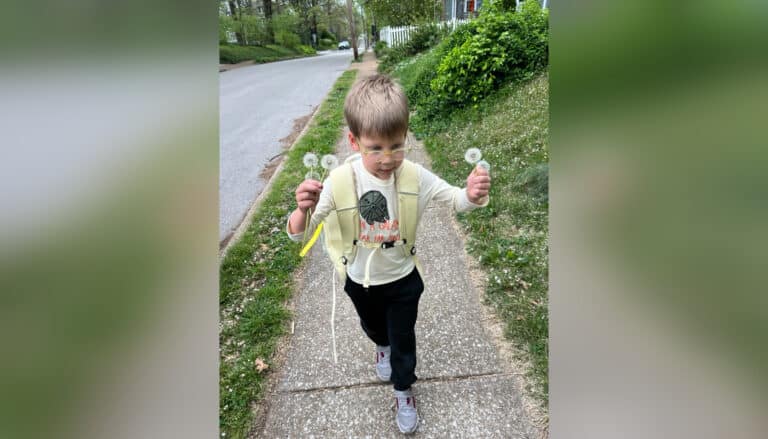
Ellis is a dreamer, loves stories of every kind, library books, Star Wars, and all things magical. He especially loves stories from when his mom was little, and prefers that they be shared in her lap. One of his favorite stories from when his mom was a child is the one about puffers—dandelions that bring wishes, and the special square in the backyard that Grandpa left unmowed every year so Ellis’s mom and her big sister and two big brothers could always have access to their wish makers. Ellis made a point of gathering puffers every day on their walk...
Some kids don’t just say “no.” They mean it. They resist direction. They question instructions. They want to do things their own way, even when it would be easier to follow along. These children are often labeled as stubborn. But what if that behavior is not the problem? What if it is the beginning of something important? Strong-willed children are not trying to be difficult. They are trying to make sense of the world in their own way. They want to understand why something matters before they commit to it. When they are told what to do without explanation, they...
Yesterday I went to urgent care. I had a sore throat, and my doctor had no openings. It was super disappointing because I actually had plans in the morning to see my grandson, and in the evening to go out of town for my sister’s birthday party. It was the rare occasion that everything was already set up. After my insanely long bout of pneumonia and being tethered to my nebulizer for so long, I was looking forward to it with enthusiasm. Of course, par for the course, life had other plans. Instead of being just a 24-hour nuisance, it...
Imagine a theoretical college course designed for parents called Proper Family Mealtimes. The class focuses on the core ingredients required to have a truly connected meal: dinner etiquette, polite conversation, menu planning, and hosting. Backed by scientific research, parents will gain knowledge of simple yet practical steps to make mealtime meaningful again. My family would fail this course. When it comes to etiquette, shirts and formal seating are optional. My children pass on polite conversation, swapping in slang like “bruh” whenever possible. Our meal plan rotates between five kid favorites with the option to reject them all, at which point...
In most homes, the marks on the wall are a simple celebration of time passing. They are pencil lines that track how many inches a child has gained since their last birthday. But in our home, those marks represent a much deeper, more complex story. When your child lives with multiple hormone deficiencies, growth is never just “natural”—it is a carefully managed medical achievement. However, as any medical mom knows, the story doesn’t end at the top of the head. It begins deep inside, with a tiny gland that isn’t sending the right signals. Having multiple hormone deficiencies is often...
Bedtime is when my kids tend to open up the most. The lights are low, the day is winding down, and their guard finally comes down with it. One night, my son told me he had been having a really hard time at school. Some boys had been so relentless that he left the cafeteria before finishing his breakfast, deciding it was better to go hungry than face more teasing. Because he’s such a kind boy with a big heart for others, seeing him face that kind of cruelty made my heart ache even more. It wasn’t the first time...
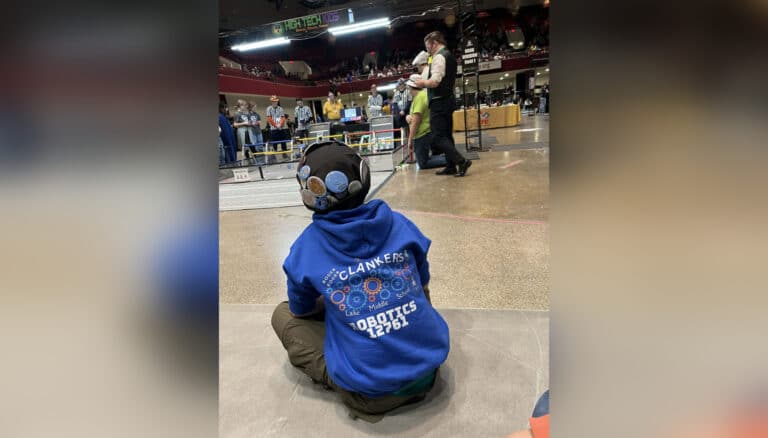
These robotics kids are going to shape our future. I think this every time I watch an elementary, middle school, or high school competition. My thoughts go back many years to when my middle child, who was six at the time, went with my husband to the high school robotics shop. They were only stopping in briefly to pick up some engineering kits, but my child quickly became captivated by what the “big kids” were doing. He stood quietly watching until one student walked over and asked if he would like to see what they were working on. My son,...