
 By Kim Brown Reiner
My parents dropped me off at Dascomb Hall in Oberlin College way before cell phones or initials in neon lights above a bed on risers were a thing. Long-distance service in the room cost extra, which my father wouldn’t pay, on top of tuition, room and board, so there was no way to be in touch with anyone at home, other than writing letters.
My father, who died 15 years ago, wrote often. I rarely did. For better or worse, from August until Christmas break, I don’t remember having any other contact with my parents, so the expectations when I dropped my daughter off at Syracuse University in late August were admittedly low.
“A text once in a while, so we know you’re alive,” I said when we got in the car to drive back to New York City, but it wasn’t something I really expected. So, I was surprised to get a FaceTime call only an hour or so later and naturally thought something had to be wrong. Which it was, if you’re a 17-year-old freshman who wants to sign up for classes at the gym, but the health center app doesn’t work. My boomer idea of walking over there and talking to someone was so preposterous to a teenager, that I never thought I’d hear from her again.
But I did the next day because she thought she failed a grammar aptitude test and wasn’t sure if or how she could take it again. I sent virtual flashcards, links to a Reddit discussion about the test, and thought about how different being away from home was for kids.
When I was 15, I was hospitalized for severe dehydration while on a teen tour to Israel. Even though the doctor said I might not survive and my mother was in the same country, no one contacted her until I was unhooked from an IV several days later. Maybe the tour leader didn’t know which hotel she was in, or maybe that’s just the way things were at the time. Whatever the reason, without a family member or phone, I developed ideas about life I had never previously considered outside of the book Are You There God? It’s Me, Margaret.
Moreover, my family didn’t need to worry about me then, or several years later when I wound up having an appendectomy in a Russian hospital without running water. By the time they knew anything, everything was fine.
Maybe this is why anxiety and depression are at all-time highs among college students . . . because so many have never had to figure things out on their own. As a mom, I am certainly guilty as charged. I text often because the house seems too quiet now that she’s gone. But the short responses leave an incomplete picture. For example, I text “How was the party?” and she replies “it was fun.” These exchanges make her seem even further out of reach than she already is.
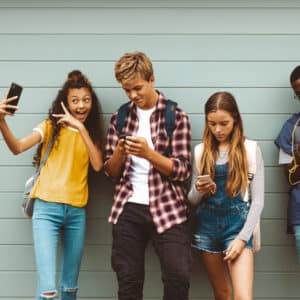
I even joined TikTok and Snapchat because my daughter lived at home for 17 years, and now, she lives somewhere between Syracuse University and these apps. But I don’t really know how to use them, and they don’t leave me feeling any closer to her.
I tried to send a filtered picture of me as an ape because that’s my middle-aged idea about how to communicate with teens on Snapchat, but I accidentally just messaged the filter. She responded with a question mark, but I couldn’t explain what I did, what I meant to do, or why.
Occasionally—actually, really often—I check the “Find My” app because until a few weeks ago, I always knew where she was and could picture her there. And while sometimes it’s nice to feel assured when she’s in her dorm room or dining hall, last Friday night her icon went from the library—which made me concerned she didn’t have any friends—to the middle of a highway at midnight, which convinced me she was dead.
I later learned the highway median was an Uber pick-up point near a concert venue and immediately understood why my parents’ method of parenting grown children made much more sense.
While I treasure the pictures, GIFs, videos, texts, and FaceTime calls from college, I miss the descriptions and thoughts about this adventure that never will be written in letter or postcard form.
Since my father passed away, I look back at the notes he sent me at college, all the time. “Until we meet again,” was how those letters always ended, with a smiley face inside the first letter of his name, Oscar.
Perhaps that way was better: a few lines on paper about a day or a life, with the time and space to miss each other, and imagine the rest. That’s all there ever was when we were kids until we met the people we loved most, again.



 by Megan Hollinger
 by Susan Greco