
 By Katie Revai LeFevre
It’s been two years since the darkest chapter of my life as a mother. My then-newborn son, a preemie, had been home from the NICU for less than a month. He had just hit his due date two days prior when he seemed to develop a cold—congestion, cough, all the typical symptoms. Until on that ordinary Sunday evening, that is, when everything took a very scary turn—very suddenly.
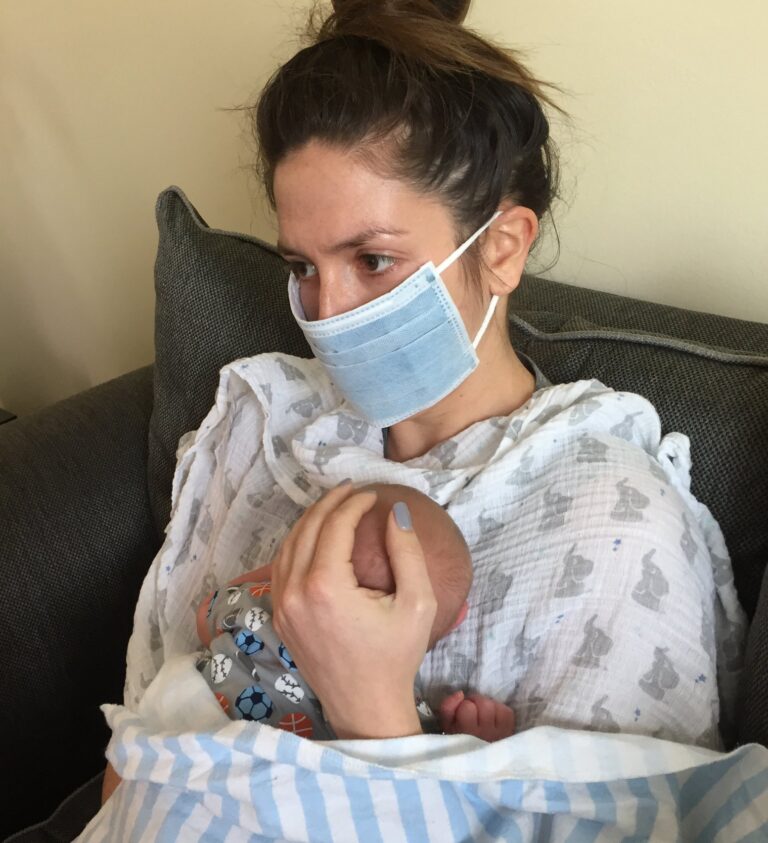
I was home alone with my newborn and my 1-year-old when I realized, around dinnertime, that my son wasn’t himself. I was still getting used to life with two under two (both with unique health concerns at the time), which made me wonder if I was simply letting my anxiety get the best of me.
Deep down, though, I knew something was wrong, especially when my tiny baby completely refused to nurse or bottle feed. His breathing became increasingly labored. At one point, he started foaming at the mouth. His tiny, weak cry seemed to call out for help, yet I felt helpless. Panicking, I called our neighbor who confirmed we needed to get him to the nearest pediatric urgent care immediately. She followed us there and stayed for a bit.
Thank God our neighbor, a retired pediatric nurse practitioner, reassured me that it wasn’t just my anxiety speaking. The doctor took one look at my ailing son and called for a nasal cannula and ambulance immediately. “Your baby is very, very sick,” she stated bluntly. I’ll never forget the harsh shock of those words. I was gutted.
I’d been so careful to protect him following his departure from the NICU. How could this have happened? I wondered, begging God to intervene. The ambulance arrived, and his tiny little tired body was loaded up for transfer. Back to the hospital we went.
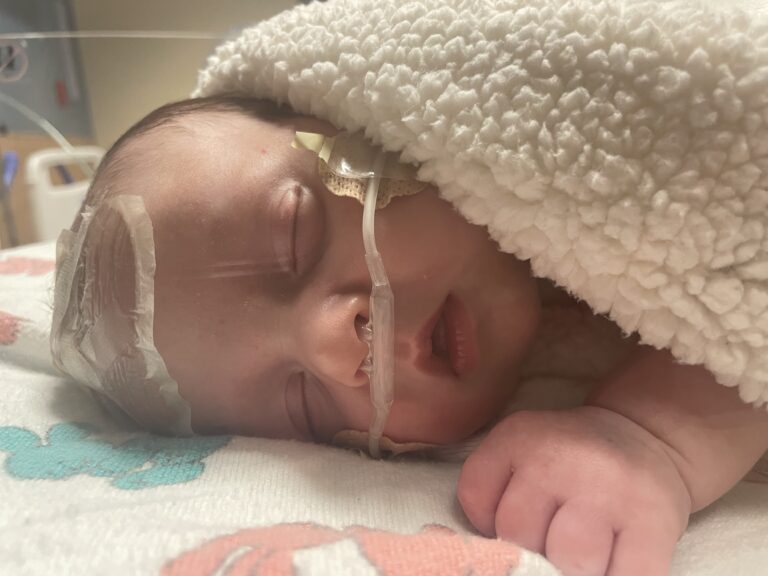
We were admitted right away. My son was placed on high-flow oxygen and tested for RSV, which he tested positive for. He continued to refuse feeds and was placed on a feeding tube for nutrition. His care team assured me that his condition was, unfortunately, quite familiar to them. We discussed the range of severity of RSV cases with the mildest on the floor involving a night or two at the hospital. For a moment, my hope increased. I figured my strong boy, who had already grown leaps and bounds, couldn’t possibly fall seriously ill. I was wrong.
Two days later, my baby was transferred to the PICU. A day in, he was intubated and placed on a ventilator. While stepping into the elevator to head to my son’s floor, I noticed someone from the floor itself was calling me. Moments later, I arrived at his room to find 15 to 20 PICU staff bedside. They were rushing to place my baby’s ventilator. I collapsed onto the chair outside of the room.
My son’s tiny body couldn’t work any harder than it had already been fighting to. He needed a machine to breathe for him. He was on full life support. His left lung had collapsed. All I could do was wait beside him and pray over his resting body. All while trying to drown out the constant beeping of monitors and machines, the constant flood of doctors and nurses and respiratory therapists.
Throughout the next week, I watched my son’s oxygen levels fall, rise, and fall again. I watched his monitor obsessively. I watched him be bagged for stabilization. I watched residents huddling for rounds to discuss my son’s daily stats aloud. I watched a group of women leaving the PICU in total devastation, holding up a fellow PICU mother who had just lost her child. (No matter what your child’s prognosis is, being in the PICU on a regular basis exposes you to things you can’t ever erase from your mind.)
I watched the breast milk I had pumped at my son’s bedside sit idle in his room refrigerator. I watched his care team poke his tiny feet for blood draws, struggle to place a central line on his tiny vessels, and administer fentanyl because, ironically, something so deadly is also sometimes used for sick, intubated babies. I watched it all . . . daily chest X-rays, lung suctioning, you name it. I watched my baby boy fight for his life as he lay still on his hospital bed. My goodness, I watched him fight.
And yes, praise God, I watched my baby boy be extubated, open his beautiful blue eyes, and cry out loud once again. He made it.
While my son’s encounter with RSV resulted in a victory story, his battle didn’t end upon discharge from the PICU. He’s grown and is thriving, but has since dealt with abnormal breathing patterns that have, ultimately, required two surgeries to resolve. The second of which resulted in an overnight stay in the PICU. He’ll likely always have chronic breathing issues and asthma. His airways are narrowed from being on the ventilator at such a young age, which we’ll continue to monitor over time.
Before coming face to face with the scary side of RSV, I never imagined I’d sit at my child’s bedside and watch them silently fight to live. I never imagined I’d question whether or not my child was going to make it. I never imagined I’d call our priest and ask him to please send someone to bless our newborn in his PICU room—just in case. I never imagined any of this would be the case for us. I don’t think anyone ever does.
I share my son’s story to say the following: please, please protect your babies. If you’re not comfortable having company during RSV season, don’t. If you’d rather not allow others to hold your newborn, don’t. If you’re worried about how grandparents might react to your “no kissing the baby” policy, forget about their feelings. They don’t matter. Your child’s health, well-being, and life do. Don’t ever feel guilty for doing what you need to do. RSV might be “just a cold” to some, but it’s much too great of a risk to take on the tiniest of babies.
In addition, please protect other people’s babies. Don’t kiss someone else’s newborn. Respect their parents’ boundaries. Don’t beg to hold them. Wash your hands before visiting. Don’t visit if you’re even the slightest bit under the weather. All of this sounds so basic, and it is—until it isn’t.
Nobody wants to witness their baby nearly lifeless on a hospital bed. Nobody. There’s no such thing as being too protective of a newborn during RSV season. Please, take my word seriously. Those babies are counting on you.



 by Kamrie Smith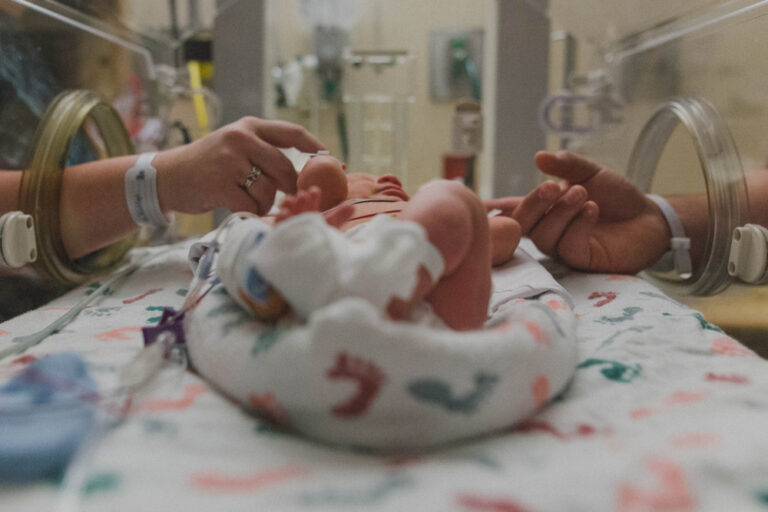
 by Amber Backus