


“Dance! Dance!” I sat on the kitchen floor in front of a dishwasher full of clean dishes. We had just finished dinner and they had been in there since lunch.
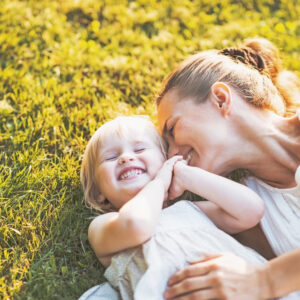
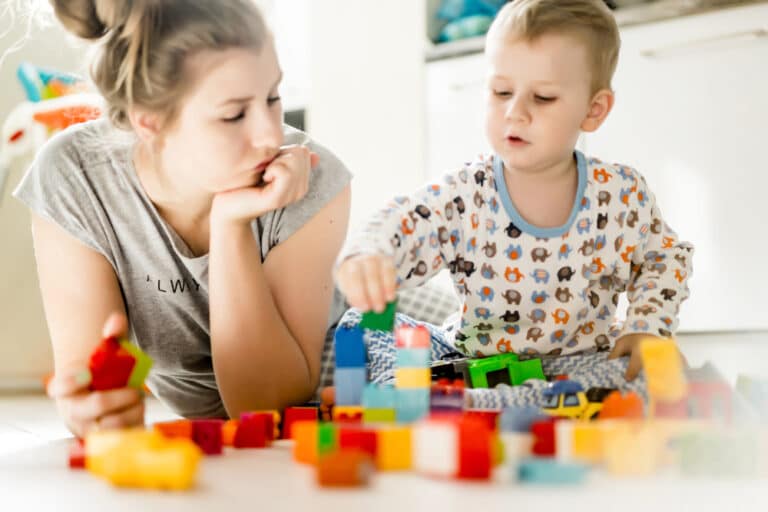
“Up! Dance!” My 2-year-old daughter strongly prefers my full participation in all activities, particularly dancing, a frequent activity to fill the long hour between dinner and bedtime. Lately, her favorite dance maneuver involves holding my hands while she drags her weight in circles around me as I spin in place. The resulting dizziness delights her and sickens me—a reaction caused, at least in part, by the first-trimester nausea she knows nothing about.
Despite her busy day at nursery school, she’d been bursting with energy all afternoon, choosing activities requiring full body contact and my complete attention. After I picked her up, she raced to her “tumble gym” (a foam play structure we bought during our first pandemic winter) to jump off the top into my arms over and over, giggling.
“More! ‘Gain!” I counted her orbits loudly on my fingers as she ran around me and the gym at top speed, nearly slamming her face into the door because her eyes were glued to me, like some combination of ballerina and whirligig. When we finally sat down to watch Sesame Street, a welcome reprieve during the exhaustion of early pregnancy, she laid on my body like it was her private sofa, her head resting on a sore breast.
I have been the preferred parent over the past few weeks, for whatever reason. When her daddy gives her a bath, I hear the sound of the faucet accompanied by her constant plaint: “Mama? Mama! Mama. Mama?” She will happily run from me at the zoo or the park, but at home, she frets if I am in a different room for more than a minute.
My daughter has seen me do everything that women do in a bathroom. She has watched me shower, put on mascara, and poop–sometimes, when she was still in diapers, she felt inspired, and we would empty our bowels simultaneously. She has seen a bloody tampon with reactions that range from laughter to a concerned “boo-boo?” A bizarre experience, this physical intimacy with someone who doesn’t know or even suspect the events happening inside my body.
The life within my sweet girl is increasingly irrepressible while the little life inside me is faltering.
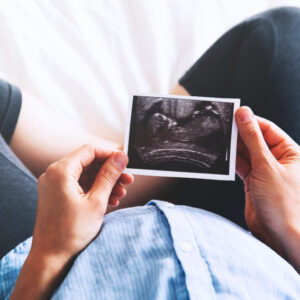
“A gray area,” the doctor told my husband and me early that day after our first routine ultrasound. At that point in my first pregnancy, Eleanor had appeared as a fluttering peanut, already dancing. Today we saw a heartbeat, but the embryo was shapeless, tiny, and still.
“Are we talking about a 50-50 chance?” I asked.
“Given all the facts we have . . . I wouldn’t say I’m even that optimistic.”
Another ultrasound in two weeks will provide a definitive answer. Until then, there is nothing to do but wait. Meanwhile, the mild, periodic cramping in my abdomen, previously a “normal symptom,” is now laden with potential meanings. Is it a sign of my uterus expanding to welcome life, or contracting to expel its opposite? I am like the box that keeps Schrödinger’s cat.
As my freshly washed toddler throws herself into my arms, breathing heavily, the bath having done little to calm her exuberance, I wonder if the second heart inside me still beats. If not, when will my body recognize that silence? Will it start when I’m alone with my daughter? How shocked and distressed she would be to have the bathroom door closed in front of her as I protect her from seeing the fuzzy remains of what would have been her sibling.
My mind is on the future, but my girl exists only in the present, her instincts pinging her toward and away from me, back and forth between the safety of her mother’s body and the compulsion to explore.
“Up, dance!” she demands, and I obey.


 by Samantha Sutton