
 By Mary Kate Hampton
This was the first sacrament without one of my parents. For the last one, my mom was in the throes of dementia. But still, she knew it was an important day. She was still alive. So much has happened in the last three years.
At my mother’s deathbed three Mays ago, all I could do was pray the rosary. I didn’t know what else to say. I find comfort in the rituals of Catholicism, in the humanity of the saints, and in the traditions of the Mass.
Today, my youngest child had her First Communion. Last night, my two oldest children were confirmed in the faith. And the day before that, the church had named a new pope. It was a big week.
There was so much preparation for the sacraments: Paperwork. Prayer. Class time. Meetings. Emails. Dressing up. And a little shadow clouded my brain, reminding me as I prepared: I do not have a mother or father anymore.
I love old people. I always have. I grew up at the breakfast table, happy hour sofa, and dinner table of my maternal grandparents. I adored them. In college, I was swept into the loving Long Island Italian family of my roommate and her grandparents. We spent more days eating and talking at their kitchen table than we did at college bars. And now, I miss old people. I don’t have any of my own.
As a mom of four, I have been so wrapped up in the mothering of young people. At the same time, I have missed the loving tables of my parents and grandparents. I long for what could have been. I watched from one pew behind as my son’s classmate and his grandfather bent their heads together to chat in church. It was so tender, I teared up. I realized I was pining for my own dad to know my 8th-grade son.
I grieve for that now—for my dad to know that I named my son Anthony. That he has the greenest eyes and the quirkiest sense of humor. And I wish Anthony could’ve known my dad—his warmth, his larger-than-life self. I wish he could’ve seen milestones like this.
This morning, my youngest daughter put on a white dress, wore my wedding veil, and processed down the aisle to sit with us before her First Communion.
I stood next to my husband, who has stood by me, pillar-like, through so much death and loss—parents, a sibling, another sibling’s addiction, yet another sibling’s divorce, schisms, conflicts, and disease.
My other children, dressed up and present for their little sister, scooted down the pew, closer to our friends, ones who have become like family over the last decade.
And even with so much love and depth alongside us, I felt a sudden rush and a gaping, vacuum-like hole.
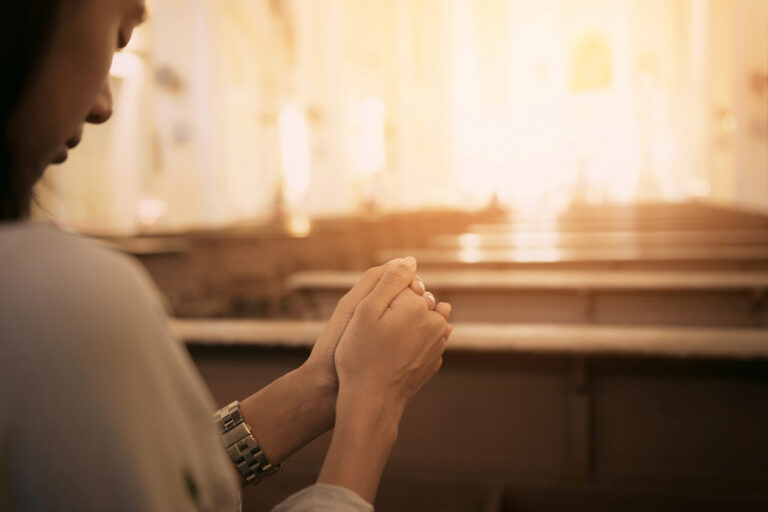
I was moved to see my littlest in a white dress and veil, her little hands—with bug bites and nail polish—pressed into prayer. But I was also moved by what was missing. My mother would’ve wanted to be here for the youngest grandchild of her 14. My dad would have loved it too; baby daughters were his favorite. A flood of tears unleashed, silently and without warning—running mascara, running nose, searching for a tissue. I couldn’t stop crying, and Mass hadn’t even started.
I understood what it was: a rogue wave of grief for what was missing from the day. The family I grew up with often occupied a table set for 15 or 20, had parties for 40 or 50. The family I am raising has shrunk down to just the half-dozen of us, sometimes with friends who are like family. There’s something to be said for quality and quantity. It is enough.
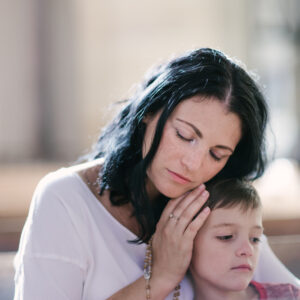
I must’ve cried for a solid minute today. My husband handed me a pocket square, and I pulled it together to return focus to my little daughter. Sensitive and knowing, she leaned her forehead against mine, absorbing much of the grief that had just poured out.
It is often in the quiet corners of church that I ask, despite loss and difficulty: Am I being loving to my husband and kids? This is the most important thing. I’ll never forget my parents, nor the loss of so much, but I can build a good family anyway. And those who loved us remain; we really are who we’ve been most deeply loved by.


 by Carisa Peterson
 by Klara Donovan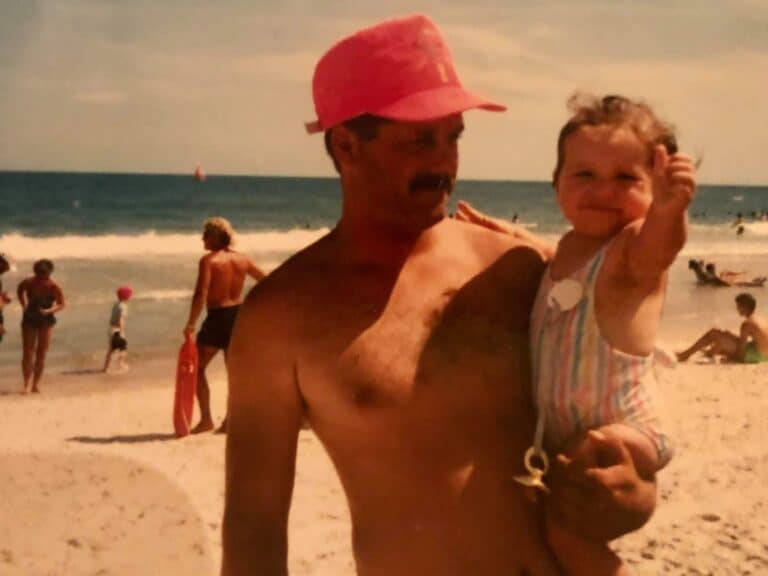
 by Chelsey McCarthy