

A Gift for Mom! 🤍

One of the motherhood related dilemmas I have been grappling with recently is how to approach the concept of loss and death with my 3-year-old son. This is not something he has had to deal with yet, but I believe it is never too early to start preparing our children for any sort of adversity or suffering they may experience in life. Dealing with the loss and death of a loved one is life-changing for even us adults, so we can only imagine the effect of the same on our young ones.

The inescapable fact that we will all die one day is terrifying. Processing that a loved one has passed away or is in pain and suffering and there is not much time left, is extremely heart-breaking and difficult. It sometimes feels like the strings that are tugging at your heart are being weighed down with a big rock. Understanding loss and death is an art; I don’t fully understand it yet and I am sure most people don’t. We may never understand. However, a child’s capacity to understand death and dying is obviously limited and varies according to the age and so will our approach.

At the age of 3, a child’s view of the world is pure and simple. It is unembellished. Honesty is key; that has been and will always be my policy when it comes to discussions with my boys. Our children learn from the examples that are set for them and if we expect them to be transparent and open, we should exhibit those qualities as well. The first thought that enters my mind when I know I have a challenging subject to discuss with my son is, “He maybe too young to understand.” Well, it’s incredible how aware and astute 3-year-olds can be these days! Anything when explained in basic terms and rationally to our children will make sense and eventually sink into their heads. We don’t have all the answers, but I have learned it is critical to establish that sense of comfort and openness with my elder son (my younger one is only 6 months old). What we need to remember is to tell them there is no right or wrong way to feel.

Explaining and getting them to understand that all living things die sooner or later takes some skill; the key is in the way we speak. We need to somehow help them differentiate when someone dies owing to an illness and if someone suddenly dies in an accident. Even after explaining this, kids will continue to ask where a loved one is because it is hard for them to grasp the concept of someone not coming back. They will only be able to grasp the finality of death when they are a little older. This can be the most frustrating experience for parents, but it is important for us to reiterate it as much as possible. One thing that most parents don’t believe in doing is showing their child the actual body, preventing them from any trauma from not seeing their loved one for an extended period. However, showing them the body creates a sense of closure.

Statements like “he has gone away for some time” or “she has gone to sleep” gives your child the impression that the person is expected to come back or wake up. What happens when your child then asks you when he will be back? At the time, we may think that being gentle and indirect will soften the blow and make more time to process the situation. That is not the case. What our children expect from us is information “as is.” Telling them, “She is with God now” or “He is now in heaven” is more of an appropriate explanation. Chances are they will also ask us who God is and what heaven is. They also need to see us grieve so that they know it is ok for them to grieve in their own way as well.

I recently asked a good friend of mine how her son was so independent. She told me that she has always spoken and explained things to him like an adult. Not treated him as an adult, but spoken to him like one. This attitude is one that I hope to be able to imitate with my own children. Nothing is easy when raising children. You wonder whether each and everything you do and say is right or not, but the reality is that there is no right or wrong. What is right and works for you may be completely wrong for someone else. Introducing loss, death or dying is one of the hardest things a parent will ever have to do and is better sooner than later. The way we decide to explain it to them will make an impact on the way they see their world and on their imaginations. It is understandable that we as parents want to protect our children from the idea of dying, but death is a natural part of life. Isn’t it better to protect them by making them fully aware of what death truly means, rather than shielding them from something that will help shape them as individuals?


So God Made a Grandmother book by Leslie Means

If you liked this, you'll love our book, SO GOD MADE A GRANDMA

Order Now!

Antara Pandit

Hi! I'm Antara and I live in Chennai, India. I am a doting Mom of two teddy bear looking boys. Going from a 9 am to 5 pm corporate job to writing, my passion lies in sharing my voice with to-be moms and moms all over the world, to address real everyday parenting challenges, at the same time integrating my personal experiences. I have always been a "let's get the party started and finish a bottle of rose champagne" kind of girl. Even after becoming a mother, I am still that "let's get the party started and finish a bottle of rose champagne" kind of girl. My mantra - work hard, play hard and be a mom! 

Farewell My Father: Walking the Trail of Beauty in Old Age

In: Grief
Grown daughter and elderly father

In his last years, Dad spent his days in a chair by the big picture window. From there, he could survey all the comings and goings of the ranch. He watched the weather, the dogs, and our Arabian stallion, Axum, galloping through the pines and calling to the mares across the hill. Occasionally, Dad would alert us that a certain dog had escaped or that a storm was coming in. He was looking out. He was keeping track. He needed help to move even a few steps. At night, my husband or I cleaned him, dressed him, and tucked him into...

Keep Reading

Sometimes Healing Doesn’t Look Like Moving On

In: Grief
Young woman holding red umbrella walking next to canola field

Outside, the sky hung in a thick, dim slab, like a ceiling over the trees that stood crooked in the wind. Not the fresh spring breeze we’re used to in Florida, but the damp, cold kind that makes you pull your coat together with tight fists. I got there right on time, parked in a front spot in the almost-bare lot, and slid my violet boots with fluffy pom-poms onto the asphalt. I braced for the impact of the frigid air and tucked my body inward as I did a little hop-jog into the pub. Once inside, I let out...

Keep Reading

Now that You’re Gone, I Sit In This Waiting Room Alone

In: Grief, Loss
Woman looking at water

I lay in bed this morning, sweet boy. It is Saturday. Seven of them since you left. Half awake, I turned over and saw Grief staring right at me. She pounced then stood, haughty, on my chest. I couldn’t breathe. She yelled that she would be close today. If she feels like it, she might even be relentless. She is cruel. You were the reason, sweet boy, for me to get out of bed on a Saturday morning. Actually, every morning you were my purpose from the moment I opened my eyes until the moment they shut. I knew on...

Keep Reading

She Was the Glue That Held Our Family Together

In: Grief
Woman holding fish

They say you don’t know what you have until it’s gone. I found that to be most true when my grandma passed. Like many grandmas, she was the best. She was kind and tender, but firm when she needed to be. She gave her time freely and used her baking talent to bless others. She had little and needed little, yet she had a way of drawing people together. There wasn’t a day I can remember when someone didn’t call her or stop by. She seemed to have all the answers and somehow knew how to fix almost any problem....

Keep Reading

My Parents Will Never See This Face

In: Grief
Woman with sunglasses shown in rear view mirror

You’ve had that moment, right? That moment when you don’t recognize the woman standing in front of you. Her hair is grayer. The skin around her eyes is a bit darker. Even without noticing the small details, that face is different. It’s aged. And as I stared at her yesterday afternoon, all dolled up and nowhere to go, it dawned on me: My parents will never see this version of me. My mom will never get to see hands that look like hers. She’ll never recognize the wrinkles or the sun spots. My father-in-law joked about gray hair with my...

Keep Reading

The Due Date that Never Comes

In: Grief, Loss, Miscarriage
Woman walking down path

It is not often talked about. I completely understand why, but when going through something so heartbreaking and devastating, women shouldn’t have to suffer alone or in silence. If you’ve gone through it, you probably already know what I’m referring to – miscarriage. It is the reason many couples don’t tell people they are expecting until after the first trimester. It is so unfortunately common that one in four women will experience a miscarriage in their lifetime. According to the National Institutes of Health, 15-20 percent of pregnancies will end in miscarriage, and it is the most common pregnancy complication...

Keep Reading

Repotting Myself: What My One‑Armed Grandpa Taught Me About Growing Anyway

In: Grief, Living
Black and white photo of older man in garden

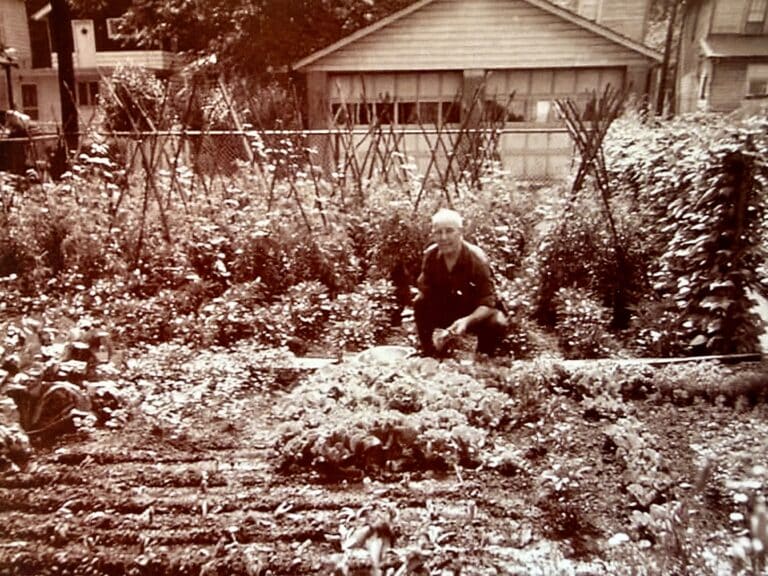
I was never meant to be a plant person. I’m the woman who can kill a succulent on the way home from the store. Once, a fern sighed in my direction and gave up. That is my spiritual gift. My grandpa Dominic would have laughed—hard. He loved to laugh. And sing hymns passionately in Italian. He was an Italian immigrant who lost his arm working in a mill, and still, he woke up every morning and dressed like dignity itself. He shopped for my grandma. He fixed what was broken. And he tended the biggest, happiest garden you’ve ever seen....

Keep Reading

When I Look In the Mirror, I See My Mother

In: Grief
Woman with mother smiling in older photo

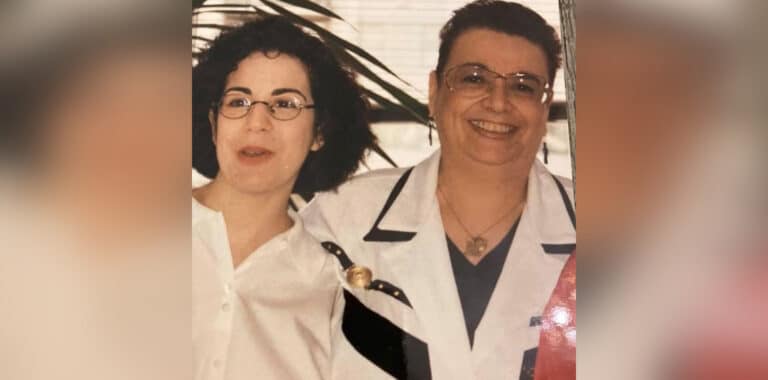
Recently, whenever I look in the mirror, I see a strong resemblance to my mother.  People always said I looked like her, but I never really saw it until now. I think it may be because you always think of your parents as being older than you are. At the age of 61, I am now only two years away from the age my mother was when she died. The only good thing about dying young is that everyone will remember you that way.  I have only known my mom as the vibrant, personable, and active woman she was. Well,...

Keep Reading

I Lost My Daughter on Mother’s Day: 3 Truths I’m Believing Today

In: Grief, Loss, Motherhood
Woman and young daughter smiling

Editor’s note: This post discusses child loss Child loss changes Mother’s Day. My 19-month-old, Julia, died suddenly on Mother’s Day in 2024. Three months later, her autopsy revealed she had B-cell Acute Lymphoblastic Leukemia (B-ALL, also known as SUDNIC). Julia died a week after we did an embryo transfer at an IVF clinic in an attempt to have a second child. We found out three days after Julia’s death that the embryo did not make it either. Six months later, we did another embryo transfer that succeeded, and I now have an 8-month-old daughter, Lucy Mei (“Mei Mei” means “little...

Keep Reading

I Miss Having Parents

In: Grief
Grown daughter posing between smiling parents

I have been living with the ache of loss for so long that I truly don’t remember what it feels like not to carry it. Sometimes it rests quietly beneath my ribs, dormant and almost polite. Other times it rises without warning—on an ordinary Tuesday afternoon, in the middle of a coffee line—and cuts straight through me. Today, it was a song. I was waiting for my coffee when “Pictures of You” by The Cure drifted through the café speakers. I hadn’t heard it in 20 years. In my twenties, it meant heartbreak—young love unraveling, relationships ending before they were...

Keep Reading