


I was at an all-time low when I saw the post. It was just like dozens of others about motherhood and parenting, but this one cut more deeply. The essay, aimed at new mothers, encouraged us to hold on through the exhausting and difficult season of unwashed dishes, sleep deprivation, and midnight feedings. The author reminded us we would eventually come out the other side to a place where our babies would gain independence and learn to clothe, feed, and bathe themselves. “Your time is coming,” it said.
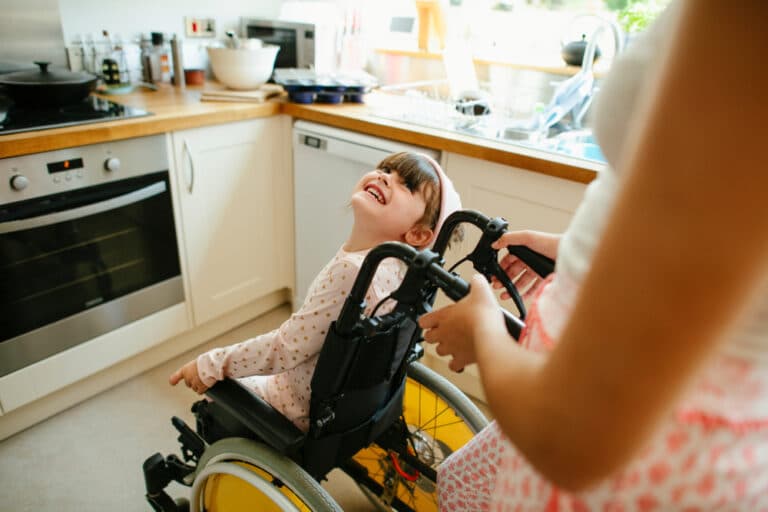
In some ways, this post resonated with me profoundly. I, too, was struggling with exhaustion and sleep deprivation. I, too, battled heaps of laundry and mountains of dishes. I, too, cared for someone who could not feed, bathe, or clothe herself and who often cried because she could not voice her fears or desires. The difference between me and those new mothers though? My someone was a kindergartner, not an infant.
For six years I have cared for my daughter, JJ, whose rare and progressive genetic disorder has robbed her of her words, purposeful hand use, ability to chew and swallow, and independent mobility. JJ not only needs me to clothe and bathe her, but I blend food for her feeding tube, manage her daily medications, lift and move her, and shuttle her back and forth to endless medical appointments and therapies.
Articles and posts about the exhausting and overwhelming nature of early motherhood often have me scrolling by quickly, hoping to avoid a sharp stab of resentment. But this post in particular made me want to throw JJ’s 16 bottles of daily medication at the wall. Only minutes before reading it, I had been Googling “stages of caregiver burnout.” After a little research, I learned I was in the very last stage.
Although you might not realize it, many mothers like me are out there—women trapped in an endless cycle of doctor visits, insurance appeals, and the robotic voice of our pharmacy’s prescription refill service. We don’t live in a world where our children will grow up and leave our homes for a life of their own. Instead, we inhabit a parenting Groundhog Day where our children will stay with us forever. We will never be empty nesters. Never buy that RV we have been dreaming about and travel the country. Never dance at our son’s or daughter’s wedding or hold a grandchild in our arms.
This is not an easy life. Not only do we struggle with the everyday stressors of caregiving, but we also live in a world where grief and fears about the future can hit at any time. People with JJ’s syndrome can live into their 40s or 50s, but many die young. Sometimes, in the midst of the medications and mayhem, I find my mind traveling down a dark rabbit hole. I wonder how many more years I will be able to lift my daughter or how much time I still have left with her.
On top of this heavy emotional burden, mothers of disabled children have to wrestle with our unrelatability. I have lost count of the times I have read or heard about children growing up and leaving home. When it comes to motherhood, it seems to be a universal assumption that we will all one day stand on our porches, tears in our eyes, and watch our children drive away.
Treasure your time together. It goes by so quickly. This season is precious. You can never get these moments back. Comments like these remind me just how much my own parenting timeline differs from those of other parents. Because while my counterparts will be receiving their final bittersweet wave goodbye, I will still be hauling myself out of bed at night to answer midnight screams and levering JJ in and out of bathtubs.
I’m not sure what I’m asking of you—you mothers preparing for that inevitable parting from your children. Perhaps to realize that future separation from our offspring is a privilege, not a certainty? To understand that our children’s independence is not something to ever take for granted? Or maybe I’m just hoping that as you move along in your parenting journey, you’ll spare a thought for people like me—mothers for whom intensive parental caregiving is not just a passing season, but a permanent way of life.

 by Jessica Heeran