
 By Lila Whitaker
Some moments in motherhood stay with you. First steps. Preschool graduation. A first dance recital.
And then there are harder times. The ones that do not make it into photo albums. The moments when the world feels too big and your child feels painfully misunderstood. When you are parenting a child with a disability, those moments tend to find you more often.
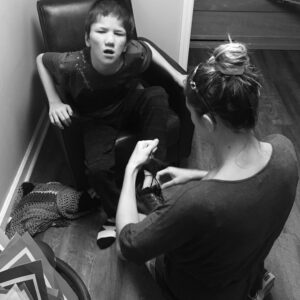
This day should have felt like a win. My son had just met a goal in therapy. We walked out of his OT’s office smiling, carrying a page full of lopsided circles that had never looked more perfect to me. I was one proud mama.
But once I sat down in the driver’s seat, a heaviness came. A familiar feeling settled in my stomach and overshadowed the joy.
This milestone came two years later than expected. It was something his little sister had reached without therapy, without instruction, and earlier than her big brother. The proof of that difference was written all over our walls in bright orange Crayola, and not the washable kind, to my dismay.
There have been lonelier moments since. The birthday party invitations that never arrive. The playdates that outgrew him. The look another parent gives you in the grocery store when your child needs more time and more patience.
Parenthood is holy work. Parenting a child with a disability? You find yourself on holy ground.
You stand in places where control is limited, outcomes are uncertain, and grace must be practiced daily. The future you once envisioned for your child may be out of reach. The schools you planned for may no longer be the right fit. The uncertainty of what comes later in life lingers in the back of your mind every day. You learn to extend grace to yourself, too, on the days you feel like you are not the mother you thought you would be.
It is humbling work, and somehow it becomes one of the most meaningful assignments of your life: the showing up, the surrender, and the daily devotion. This life eventually brings you to a moment where there is no other option but to let go. To release the plans you made on your own and trust God fully. That moment will probably come quietly, standing in the shower, crying softly and hoping no one can hear after holding it together all day.
If you are a parent raising a child with a disability, standing in the middle of a diagnosis, unsure of what comes next, holding your family together with very little left in the tank, I want you to hear this: what others overlook, God calls a masterpiece. Our children were created with intention long before the world ever formed an opinion.
Our children are not afterthoughts. They were not created by mistake. They were made in His image. Their value does not rise or fall based on milestones or public approval. God looked at them and said, “This child will show my glory in a way the world has not yet seen.”
Still, the world can feel unkind. We face realities that never even cross other parents’ minds. That is just a fact.
It is not fair that our children have to work harder for things others reach easily. It is not fair that therapy replaces playground time, or that they are often the ones asked to adjust, quiet down, or keep up.
And in a world that can feel this heavy, the places where your child is truly seen become everything. A village that helps you breathe again is priceless.
This is why community matters so much. It is one of God’s sweet mercies. He never promised us an easy life, but He made sure we would not have to endure it alone. God often meets us through people. Through the ones who choose to see, include, and love our children well.
A real community does not simply tolerate your child’s presence. It seeks your child out. It lights up when they arrive and does not expect you to apologize for things you should never have to explain. It notices their heart and says, “We are better because you are here.” A real community understands that they can learn just as much from my son as he can learn from them.
I know this kind of community exists because I have seen it. In the teacher who noticed my son’s strengths before his struggles. In the church volunteer who learned his cues and helped him feel safe. In the friends who teach their children to see the good in him, even when they do not understand the reason behind his behavior.
Your child has a place and a purpose in the Kingdom of God. Not after the next milestone, but right now.


 by Kristin Cilente
 by Kathy McClelland