
 By Brittany Marie
My hands were trembling as I reached for the pregnancy test developing on the bathroom counter. It had been three months since we lost our second pregnancy to miscarriage, and I was cautiously optimistic that this was our month. My heart tried to leap out of my chest when I saw the two lines. Our rainbow baby had been conceived. Let me preface the rest of this story by saying I knew my pregnancy wouldn’t be magical. My pregnancy with my son, who was 22 months old at the time, hadn’t been, and the short weeks leading up to my miscarriage hadn’t been either.
But I never dreamed I would spend weeks tethered to the bathroom floor praying for just one sip of water to stay down. Or that every day would be a battle against unrelenting nausea, exhaustion that seeped into my bones, guilt that I couldn’t be the mom my son needed me to be, and the constant fear that I wasn’t keeping my growing baby or myself alive.
A few weeks after the positive test, I was out to eat with my friend at a restaurant I had been craving when I was hit with a sudden wave of severe nausea. It escalated quickly, and before I knew it, I was living inside a nightmare I couldn’t wake from.
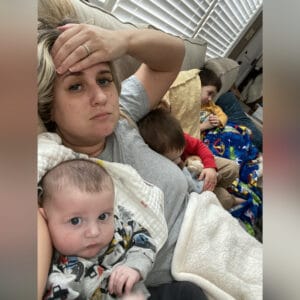
My life was in limbo while I lived in a haze of hospital visits, IV fluids, and medications that promised relief but rarely delivered. When I wasn’t in the hospital, I was a prisoner inside the four walls of my bedroom. I was watching myself waste away. I was gaslit and minimized by doctors and hospital staff. Friends and family meant well, but no words could erase the isolation of being trapped in my own body as it betrayed me in ways I didn’t even know were possible. Simple tasks became monumental. The fear was constant: fear of losing my baby, fear of losing myself, fear that my body might never return to normal. And through it all, the world outside continued as if nothing had changed, leaving me to navigate a silent, invisible battle that few could truly understand.
After the nightmare finally ended and I gave birth to a beautiful and healthy baby girl, I had to see an oncologist for infusions attempting to give back everything hyperemesis had stolen from me over those nine months. The scars lingered—in my weakened body, and in the quiet moments when I realized how deeply it had changed me. I had survived something no one could see, something that left me both fragile and fiercely resilient. That baby is almost five now, and the scars still linger. I’ve dealt with other physical and mental health issues since then, and you can’t convince me some of it didn’t have to do with this experience. Or maybe it was the other way around.
Hyperemesis gravidarum isn’t just morning sickness; it’s a relentless storm that leaves you questioning everything you thought you knew about your body, your limits, and what it truly means to survive. Hyperemesis gravidarum tried to define my pregnancy, but it could not define me. I am a mother who endured, a woman who learned the depths of her own resilience, and a witness to the quiet courage that so often goes unvalidated. If sharing my story helps even one woman feel less alone in her struggle, then every exhausting, terrifying moment is worth reliving.


 by Liz Parker-Cook
 by Meg Sexton
 by Lisa Brinson