

 By Valerie Sawicki-Bellomo
The other night, while my 7-year-old son was brushing his teeth, he spotted a shiny candy wrapper sticking out of the bathroom trash can. His eyes widened. His dad had clearly saved some Halloween candy, and now my son was determined to find the stash. I didn’t know it yet, but that tiny wrapper was about to unravel far more than a secret treat.
My son, convinced the candy was nearby, grabbed my hand and pulled me toward the closet my husband and I share. I knew exactly what he was thinking, and corrected him immediately. “This is where your dad hides the Doritos,” I said.
But my son was convinced candy must be hidden there too. When he came up empty (no candy and no Doritos!), he darted toward my side of the closet, right where I had tucked away our Black Friday holiday purchases.
I gasped and tried to block his view, fumbling through a clumsy explanation to satisfy his rapid-fire questions. In my scramble to redirect him, the truth began spilling out in bits and pieces. Finally, I said it: Santa was not real.
My son’s face crumpled. He told me though he wasn’t surprised, he was sad because it felt fun believing in the jolly old guy.
Leading up to this moment, I was primed to expect this is exactly what would happen. I had been warned the moment my child stops believing in Santa, the magic of the holiday season begins to evaporate. The advice from most seasoned moms on this topic echoed the wisdom I was given about cribs: hold on to it as long as I can.
Over the years, though, I’ve heard a wider range of opinions about Santa. Some parents feel the tradition crosses a line, and using Santa as leverage for good behavior turns the holiday into a transactional reward system. For them, the magic shouldn’t hinge on a myth, but on the spirit of goodwill, connection, and shared family traditions.
Part of that perspective always resonated with me. I sidestepped those concerns by simply telling my kids Santa believed every child was good inside (thank you, Dr. Becky). But I largely kept the idea of a mythic, benevolent figure intact.
As my kids got older, I hoped I could move away from pages-long wishlists and toy-centric talk to help them understand giving—not receiving—was the true heart of the holiday. I worked hard to weave that philosophy into our traditions once they were out of diapers. We attended community service events, dropped off donations after school, and shopped, not for their own wish lists, but for gifts they wanted to surprise each other with.
Still, every year, Santa’s generous spirit stole the show, and receiving was the more indelible memory.
You might think in this moment of truth, I found relief. No more elaborate setups. No more tiptoeing around moving an elf. An opportunity to anchor the holiday in values that mattered more.
But that’s not what I felt. Instead, there was a pang of sadness, as if I were stepping into a new era where a little piece of childhood innocence had dulled. The seasoned moms were right.
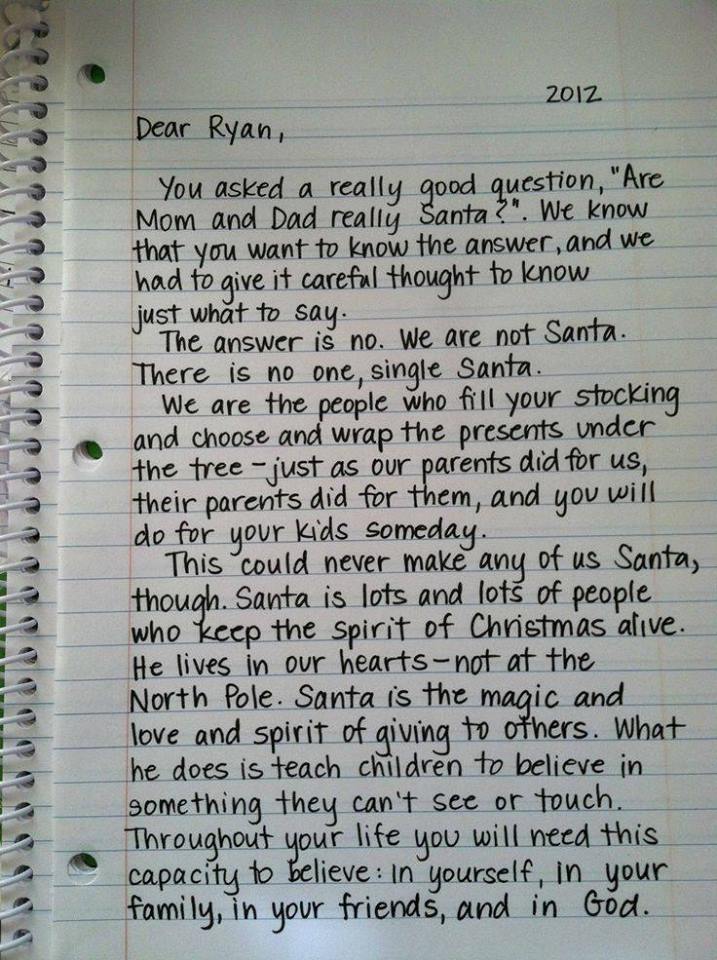
Later that night, as my son and I settled into bed with a book, I could tell the truth about Santa was still rolling around in his mind. Mid-sentence, he paused my reading to recall an expensive gift he received one year, realizing with richer clarity that it hadn’t come from a magical man in a red suit, but from his own parents.
“All this time,” he said, “all the letters, the elf, the gifts…the magic…it was all you and Dad.”
My heart burst. Santa had been stealing my thunder for seven years. So, I’ll be honest, it was nice to get a little recognition.
But what he said shifted my perspective: the truth about Santa didn’t dull his innocence—his maturity only made the holiday brighter. I realized this was my opportunity to bring him closer to the true meaning of Christmas by sharing the joy I’ve felt as the magic maker all these years.
I smiled and broke the news, “Congrats, by the way. You’re now part of the magic crew. You get to help us make Christmas magical for your sister.”
His face lit up at this new revelation. And he quickly surmised this meant he could move the elf and write letters to his sister from Santa.
And in the days since this discovery, I’ve watched him embrace his new role with genuine excitement.
His mind isn’t focused on what will appear under the tree for him—it’s thinking about the joy he can create for someone else.
And having been freed from elf duty, I’m able to search for a better place to hide the presents!


 by Her View From Home
 by Holly Dignen
 by Jenny Albers