
A Gift for Mom! 🤍

We are in the final days of the 2016 race to the White House. Teachers and parents alike are wondering how to talk about politics in a civilized kid-friendly manner. How’s a teacher supposed to teach the current election when conversations surrounding the topic are never civil?

Over the weekend headlines were R-rated and seemed like the punch line of a dirty joke. News changes by the minute, and well—we don’t really want to be sending home a vocabulary list of words that have become the talking points for this political season. 

Teachers often feel unprepared to teach controversial issues. And right now we are smack in the final days of pure political controversy.

But educators would be remiss to avoid conversations about our democracy. To put it plainly–we’ve got to teach the next generation to do better. 

In 2010 I co-authored a research-study that investigated the teaching of controversial issues in the classroom. I’ve compiled a list of eight helpful suggestions as you prepare for a political conversation in your classroom or at home.

1). Know that you are not alone in your angst. Most teachers feel unprepared to talk about controversy in the classroom. Teacher training does often not touch this topic.  So feeling a bit squeamish is common. 

2). Stay neutral about your voting record and core beliefs on issues. Think of yourself as an umpire. Your job is to control the tempo and temperature of the classroom. Even if you adamantly feel we should build a wall or close the coalmines you need not voice your opinion. I personally don’t want my child’s beliefs swayed by that of their teacher. Do you?

3). What should you do when students ask you whether you’ll be voting for Trump, Clinton, Johnson, or Stein? After telling them that it is important that you don’t influence their opinion use humor to diffuse the situation. Say, I am going to “vote for Lincoln!”  Then smile and move on.

4). Take a cue from the candidates and spin the story! If you are uncomfortable diving into the present election (and who isn’t?), focus on history and government. Investigate when women received the right to vote. Teach about the Electoral College— students will be fascinated to learn that each states receive so many “votes” and that our democratic voting system is not built on a collective popular vote. Or study the three branches of government

5). Engage students in a meaningful conversation that it is actually A-OK for people to possess a difference of opinions. Contrary to political ads or the opinion of many media commentators, we don’t have to beat each other up or bad mouth those who disagree with our own personal opinion. To illustrate this point take a few polls in the classroom (i.e…favorite color, favorite food, favorite sport). Ask students if we should shame those who voted for yellow, or chicken, or basketball. Now ask students if we should shame those who vote from Clinton or Trump? Allowing and protecting our right to have a difference of opinions is one facet that makes our democracy great. This is called Freedom of Speech and is protected by the First Amendment. Historically, citizens of other countries have been jailed, killed, and banished for expressing their personal opinions. We should recognize that our government protects its citizens from such behavior. 

6). Teach how our government is an institution that abides by the thought that “Government is OF the people, FOR the people, and BY the people”.   This will help students understand the basic concepts of voting, campaigning, having rights and responsibilities, and that government is created for the people, by the people, and of the people will help students acquire knowledge about our system of government.

7). Know it is important to engage in the conversation about government, elections, and current issues with your students. National Council for the Social Studies defines an effective citizen as one who “embraces core democratic values and strives to live by them,”  “has knowledge of our nation’s founding documents, civic institutions, and political processes,” “is aware of issues and events that have an impact on people at local, state, national, and global levels,” and “seeks information from varied sources and perspectives to develop informed opinions and creative solutions.” (National
 Council 
for
 the
 Social
 Studies
 (2001).
 Creating
 effective 
citizens.
 Retrieved
 May
 26,
 2010 
from 
http://www.socialstudies.org/positions/effectivecitizens.)

8). Children and teens are heavily influenced by their parent’s beliefs. Therefore expect most young ones to be heavily biased toward one candidate. These students might repeat points their parents have vocalized. Don’t repeat these statements to people outside your classroom. The discussions that occur in people’s homes should be kept confidential. If something is so absolutely hilarious that you can’t resist repeating—well, use a pseudonym and tell folks it was an off-the-record conversation and you have to keep your source private! Because “kids do say the darndest things!”

I wish you the best of luck as you navigate the days ahead! And if a kid you know does say something hysterical…will you share it in the comment section of this article (just don’t tell us who it is)? Because at this point…we all need something to laugh at! 

So God Made a Grandmother book by Leslie Means

If you liked this, you'll love our book, SO GOD MADE A GRANDMA

Order Now!

Sarah Philpott

Sarah Philpott Ph.D lives in the south east on a sprawling cattle farm where she raises her two mischievous children (with one on the way!) and is farm wife to her high school sweetheart. A former teacher, she now spends this season of her life cleaning peanut butter & jelly off the counter, dreaming of traveling the world, hosting “get-togethers” for her family & friends, and chasing her kids around the farm. Sarah is represented by The Blythe Daniel Literary Agency. You can visit with Sarah at her http://allamericanmom.net/ blog where she writes about cultivating a life of down-home simplicity. She also has a passion for helping women cope with pregnancy loss.

Ask For the Playdate

In: Kids
Kids playing at park

When my only child was finishing up his first year of preschool a few years ago, I knew he would miss having friends to play with regularly over the summer. One day at pickup, he invited a friend from his class to come to our house.  His friend seemed interested. Her mom and I agreed it would be nice to have a playdate, but never really made plans as we were getting the kids to the car. I am not an outgoing person, and I always prefer someone else to ask me to do something, rather than being the one...

Keep Reading

My Daughter Said “No” and I Listened

In: Kids
Young girl reading picture book on mother's lap

The other day, my daughter said no. Not quietly. Not hesitantly.Just a simple, confident “no.” And for a moment, I saw it happen. That instinct so many of us were taught to ignore. That pause where girls start to second-guess themselves. But she didn’t shrink. And I realized…I’m not raising her the way I was raised. I was raised to be polite.To be agreeable.To not make things uncomfortable. And while those things sound harmless on the surface, they come with an unspoken lesson. One that a lot of us learned early, without even realizing it. Be easy.Be likable.Be quiet if...

Keep Reading

A Letter To the “Extra” Moms

In: Kids
Mom and young son shooting off firework

This is for the moms who go above and beyond for their children, the “magic makers” and “childhood savers.” While moms are always giving boundless love and doing selfless acts for their kids, “extra” moms make motherhood sparkle. You constantly prioritize your child’s well-being and happiness—it is your number one focus. You are out there creating unforgettable moments that shape your family’s lives. You make birthdays unforgettable, complete with themes, elaborate food, and decorations, and lots of thought and loving time behind each to make every year as special as the last. You make each holiday a wonderland to behold...

Keep Reading

Ellis and the Puffers

In: Kids
Little boy holding dandelion puff flowers

Ellis is a dreamer, loves stories of every kind, library books, Star Wars, and all things magical. He especially loves stories from when his mom was little, and prefers that they be shared in her lap. One of his favorite stories from when his mom was a child is the one about puffers—dandelions that bring wishes, and the special square in the backyard that Grandpa left unmowed every year so Ellis’s mom and her big sister and two big brothers could always have access to their wish makers. Ellis made a point of gathering puffers every day on their walk...

Keep Reading

Strong-Willed Kids Are Not a Problem, They Just Need a Different Approach

In: Kids
Child with wide smile and arms out behind her

Some kids don’t just say “no.” They mean it. They resist direction. They question instructions. They want to do things their own way, even when it would be easier to follow along. These children are often labeled as stubborn. But what if that behavior is not the problem? What if it is the beginning of something important? Strong-willed children are not trying to be difficult. They are trying to make sense of the world in their own way. They want to understand why something matters before they commit to it. When they are told what to do without explanation, they...

Keep Reading

He Waited for Me By the Window and It Felt Like Love

In: Kids
Chair in office

Yesterday I went to urgent care. I had a sore throat, and my doctor had no openings. It was super disappointing because I actually had plans in the morning to see my grandson, and in the evening to go out of town for my sister’s birthday party. It was the rare occasion that everything was already set up. After my insanely long bout of pneumonia and being tethered to my nebulizer for so long, I was looking forward to it with enthusiasm. Of course, par for the course, life had other plans. Instead of being just a 24-hour nuisance, it...

Keep Reading

Feeding Neurodiverse Kids is a College-Level Course

In: Kids
Child eating bagel

Imagine a theoretical college course designed for parents called Proper Family Mealtimes. The class focuses on the core ingredients required to have a truly connected meal: dinner etiquette, polite conversation, menu planning, and hosting. Backed by scientific research, parents will gain knowledge of simple yet practical steps to make mealtime meaningful again. My family would fail this course. When it comes to etiquette, shirts and formal seating are optional. My children pass on polite conversation, swapping in slang like “bruh” whenever possible. Our meal plan rotates between five kid favorites with the option to reject them all, at which point...

Keep Reading

As a Medical Mom, I Measure Growth Differently

In: Kids, Motherhood
Little girl climbing outside

In most homes, the marks on the wall are a simple celebration of time passing. They are pencil lines that track how many inches a child has gained since their last birthday. But in our home, those marks represent a much deeper, more complex story. When your child lives with multiple hormone deficiencies, growth is never just “natural”—it is a carefully managed medical achievement. However, as any medical mom knows, the story doesn’t end at the top of the head. It begins deep inside, with a tiny gland that isn’t sending the right signals. Having multiple hormone deficiencies is often...

Keep Reading

Helping My Son Through Bullying Is Healing Something In Me Too

In: Kids
Family sitting on porch

Bedtime is when my kids tend to open up the most. The lights are low, the day is winding down, and their guard finally comes down with it. One night, my son told me he had been having a really hard time at school. Some boys had been so relentless that he left the cafeteria before finishing his breakfast, deciding it was better to go hungry than face more teasing. Because he’s such a kind boy with a big heart for others, seeing him face that kind of cruelty made my heart ache even more. It wasn’t the first time...

Keep Reading

Robotics Kids Are Building More than You Can See

In: Kids
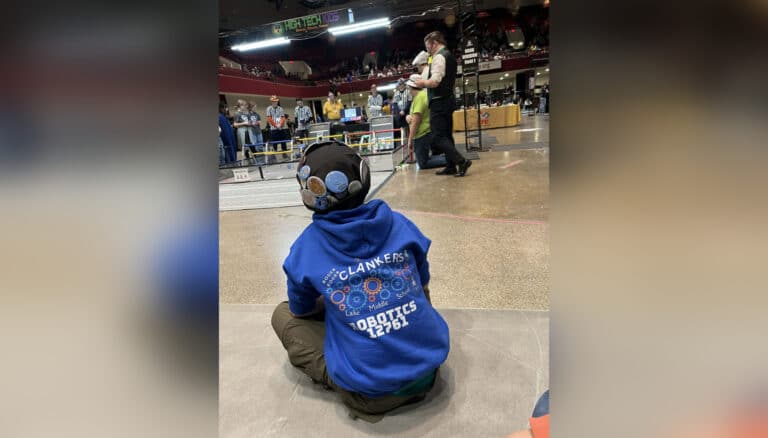
Robotics kid watching competition

These robotics kids are going to shape our future. I think this every time I watch an elementary, middle school, or high school competition. My thoughts go back many years to when my middle child, who was six at the time, went with my husband to the high school robotics shop. They were only stopping in briefly to pick up some engineering kits, but my child quickly became captivated by what the “big kids” were doing. He stood quietly watching until one student walked over and asked if he would like to see what they were working on. My son,...

Keep Reading