

 By Marissa Bader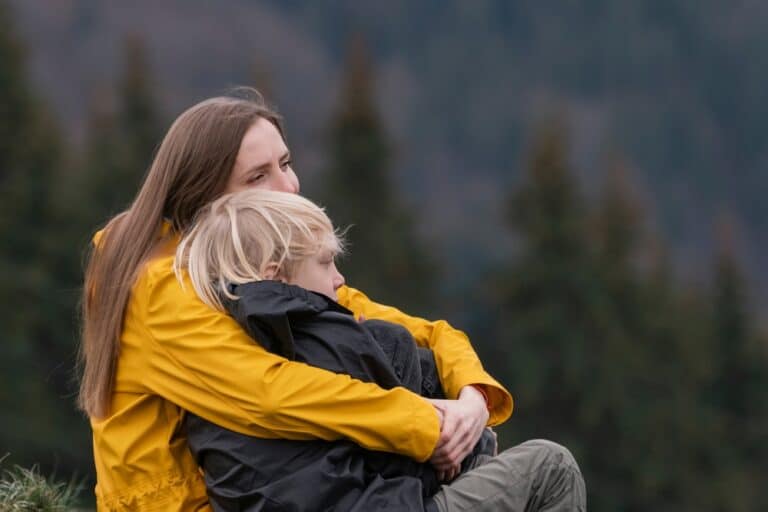
To be highly sensitive is to live life at full volume, and to feel everything in vivid, sometimes aching, color.
Growing up, I cried at everything—if my parents even slightly raised their voices, if I was called on in class and didn’t know the answer, or when classmates picked on a sweet girl for being different. It was simply a reflex I couldn’t control.
One of my earliest core memories is shopping with my mom, and the store owner gave me a balloon. While most kids like balloons, I was terrified of them, knowing that at any moment they could pop and startle me with a sharp, loud noise. I didn’t want to be rude, so I accepted the balloon, but as soon as we left the store, my instinct was to let it go. My fingers quickly released the string, and my mom and I watched as it floated upwards into the bright blue sky.
But then I remembered that my mom loved balloons, and immediately, I burst into tears. Did I hurt her feelings by letting it go? Did she want to keep it? I felt actual pain in that moment, thinking I might have let her down. Even today, as an adult, and fully knowing she didn’t care that I let it go, when I recall that memory, anguish floods through me.
Family and friends were quick to classify me as “too sensitive.”
“You need to form a thicker skin,” people would say. And I tried, I really did. But the thing about being wired a certain way is that it’s not easy to rewire the circuit. And while excruciating at times, I have also always appreciated my sensitivity. It’s what allows me to experience life’s beauty—art, joy, connection, and love—in such a meaningful and visceral way.
When I was 22, I moved to New York City, a place that assaulted my senses daily. Each morning, I left my shoebox-sized apartment and stepped into a storm of energies: frenetic, angry, exhausted, joyful, whimsical, and so much more. I was (and still am) like a walking open pore, an exposed nerve. Everything seeped in. By the time I reached my destination, I was already depleted.
Learning to create and uphold boundaries has been part of my life’s work. But like a pendulum that swings too far one way, then too far the other before finding its sweet spot in the middle, my boundaries have always been a work in progress.
Back then, to cope, I walled myself off. After a chaotic roommate experience, I lived alone. I often turned down plans and spent most of my time writing, dancing, or simply staying cocooned inside my cozy apartment. It was lonely, but it felt safe.
Years later, and back in my home state of Minnesota, I met my husband. While I’d built walls, he had none. An extrovert through and through, he thrived on connection. Where for me, home was a sacred space a person must be invited into, his was one with a revolving door—people always in and out and laughter spilling down the hallway.
But somehow, we balanced each other. I helped him slow down, and he helped me step out—out of my head, out of my house, out into life. He became the push I needed to swing that pendulum back toward the center.
And then came motherhood, something I’d always wanted but had never considered through the lens of my sensitivity.
The moment my babies entered the world, my anxiety kicked into high gear. I worried about everything: Were they eating enough? Sleeping enough? Overstimulated? Understimulated? Would I recognize if something was wrong? What kind of cruel world had I brought them into? By each night’s end, I was a pile of exhaustion and stress, all pores and all nerves exposed.
I was angry with myself for not being able to parent in a more “go with the flow” style, and simply be. But I didn’t have the skills. My old safety strategy (retreat) wasn’t an option anymore. I had to learn to be a mother who could care deeply without losing herself in everyone else’s emotions.
Over time, I’ve both done well and failed at this, sometimes within the same day. It’s my first instinct to try to fix whatever problem or negative feeling my kids share with me, both because I don’t want them to suffer and because I instantly absorb their discomfort in my own body as if it belongs to me.
But I’m learning to give myself grace and realize we all have our challenges. What matters most is that I love my children—and oh, do I ever!—and that I show up and do my best every single day.
And in many ways, my struggles have become teaching tools. I’m not embarrassed to let my kids see me flail and hear me say, “I’m feeling overwhelmed. I need a few deep breaths.” I hope they’re learning feelings aren’t things to hide or fear. They’re signals, and we can listen to them without letting them drown us.
Last year, one of my daughters said she often felt sad and didn’t know why. Maybe, she thought, because her friend was sad. I knew that feeling deep in my bones. I told her to close her eyes and imagine zipping herself into a bubble. “You can still be there for your friend,” I said, “but this bubble protects you from absorbing her feelings. Her feelings are hers, and your feelings are yours.” To this day, when she tells me she thinks she may be feeling someone else’s emotions, we practice zipping ourselves into protective bubbles.
I’ve tried to teach my daughters that other people’s feelings and problems are not theirs to carry. We can be kind and compassionate without sacrificing our peace. This is not selfish; it’s the kindest thing we can do for ourselves and others.
Now, as my girls grow into their preteen and teenage years at ages 9, 9, and 13, I feel the pull of old patterns. I soak in their worries, moods, and stresses until I can’t tell what’s theirs and what’s mine. By night’s end, I’m exhausted yet wired, my mind looping through the same anxious questions: What if she’s overwhelmed? What if she’s unhappy? What if I’m not doing enough?
But this time, I have tools. I remind myself that my girls are resilient, supported, loved, and capable. Life will bring struggle, yes, but with struggle comes the beauty of strength and self-knowledge. My job isn’t to carry every emotion for them. It’s to walk beside them as they learn to carry and work through their own.
And I think that is the lesson my sensitivity has been trying to teach me all along: feeling deeply is not a flaw. It’s a compass. The work is learning to steer with it, not against it.
If I can raise children who are both kind and grounded, who can feel deeply while protecting their peace, then I’ll know I’ve turned what was once my greatest struggle into a gift and a lasting strength.



 by Brianna Baranowski
 by Kelli Bachara
 by Jordan Harrell