

 By Lindsay Davies
The first time I learned relief could be manufactured, it came in the shape of a Tic Tac. A tiny little oval with the hint of mint.
I didn’t know they were Tic Tacs. I thought they were the same small white pill an emergency room doctor had given me when I thought I was dying — the one that made the sensations in my body and the noise in my head disappear. The pharmacist slid the container of the tiny white tablets across the counter like it was a secret weapon. My parents watched as I placed one under my tongue and casually commented that it tasted minty.
They waited. I waited.
Slowly, my world opened. My breathing softened. My worries drifted farther away. Everyone — including me — felt relief.
A couple of years earlier, it started with soap.
Just a little longer at the sink than necessary. Just a little more careful than anyone else. It started with a thought, a very quiet one that I hadn’t realized had sneaked into my mind, telling me that germs on my hands could make me sick. Or worse, kill me.
The washing became constant.
My hands turned red, dry, and cracked. Sometimes they bled as I rubbed soap into the tiny splits in my skin.
I was referred to a psychologist who diagnosed me with Generalized Anxiety Disorder and Obsessive-Compulsive Disorder.
On the drive home, my mom mentioned that we were going to stop at the pharmacy to fill the prescription that I was given for Anxiety. I was nervous about trying the medication. I had never taken anything stronger than cold medicine before.
I asked my mom with genuine curiosity if someone could die from taking that medication. “Well. I mean, if someone took the whole bottle,” she said.
My mind started thinking of all these possibilities that could happen if I took them.
What if I was allergic to them?
What if I accidentally take the whole bottle and die?
Bad advice from my brain: Don’t fill the prescription for tiny white pills. You might accidentally take the whole bottle and die.
One summer night, my dad called out for me from our front door and asked if I wanted to go with him and my mom to get a few groceries. I agreed and jumped into the front seat of our car; I felt fine. We chatted as we drove, not about anything in particular—just normal, everyday things. I remember clearly that the sun was shining through the windows, and it was a beautiful evening; I turned to look at my dad as we drove by my school. As I looked at him, I said, “I can’t breathe.”
My dad looked at me, confused. “I can’t breathe,” I repeated. My body felt as if a surge of adrenaline had powered through it. My stomach felt as if it popped into my chest. My heart was beating fast and scary. I felt like I couldn’t catch my breath. My body was telling me that I was dying. My brain agreed.
We hurried into the car again to make our way to the hospital.
I remember my dad driving, and my mom sitting in the back seat with me. I remember crying and repeating that I couldn’t breathe all the way there. I remember telling my dad to run the red lights whenever we hit one—he obviously didn’t for safety reasons, but I knew he had wanted to.
What was going on? Why couldn’t I breathe?
As we got to the emergency room, I was triaged and then almost sat down with my parents. I say “almost” because my body and mind would not let me sit. I paced the emergency room with an almost hysterical energy that could not be calmed.
My mind was racing.
I couldn’t sit still.
I couldn’t breathe.
I couldn’t stop saying it.
A lady asked my mom if I was okay, to which my mom, who had no idea what was going on, replied calmly that I would be. The lady, in a judging voice, replied, “Well. She doesn’t sound okay.”
I stood up and yelled, “I. NEED. A. DOCTOR.”
Coming from someone as shy as I was, that was a sight to see. My brain was overpowering any dignity I had.
I did not care.
The nurse at the front desk hurried me into the back corridor, where they had me sit on a stretcher. The hallway was packed with people who appeared calmer than me. That must have meant that something was seriously wrong with me, I thought. The doctor approached and started asking me questions I could not answer.
Why was he asking questions when he should be helping me catch my breath?
The doctor left and returned a short time later with a tiny white pill. He told me to put it under my tongue and let it dissolve. I did as he said. I sat there, waiting. I was waiting for what felt like hours, but had only been minutes. My brain felt tired and foggy. My body began to feel slowed. I hadn’t realized right away that my breathing calmed and that my brain was no longer telling me I was dying. Suddenly, the room felt bigger.
Things felt…safe.
This doctor literally just saved my life, I thought. It was then that we were informed I had suffered a panic attack. My first panic attack.
It’s funny, in a not-so-funny way. If you live with panic long enough, you’d think you’d recognize it. But every time it comes—every surge of adrenaline—your body is still convinced you are dying, and your brain, well, it signs off on it.
My brain eventually learned the pattern.
My body still hasn’t.
The alarms are quieter.
The wiring is not.
That tiny white pill was a magic fix that day at the hospital during my first panic attack.
A couple of years earlier, when that same medication was offered to me, my brain had overpowered any rational thinking and called the shots. My brain told me those tiny white pills were going to accidentally kill me, and would absolutely not make me feel better.
When panic attacks became a regular occurrence a few years later, those “tiny white pills” came in the form of a Tic Tac. A Tic Tac a pharmacist gave my parents to try, instead of introducing strong anti-anxiety medications at such a young age.
I assumed it was the same tiny white pill that had magically helped during my first panic attack at the hospital. It worked.
Years later, I would learn that nothing chemical had changed in my body that day—it had only ever been candy. But something changed in my mind. And that moment may have marked the beginning of a lifelong question: Where does fear come from—and why does relief feel so fragile?
Note: The information included here is not intended as a substitute for professional medical advice, diagnosis, or treatment.


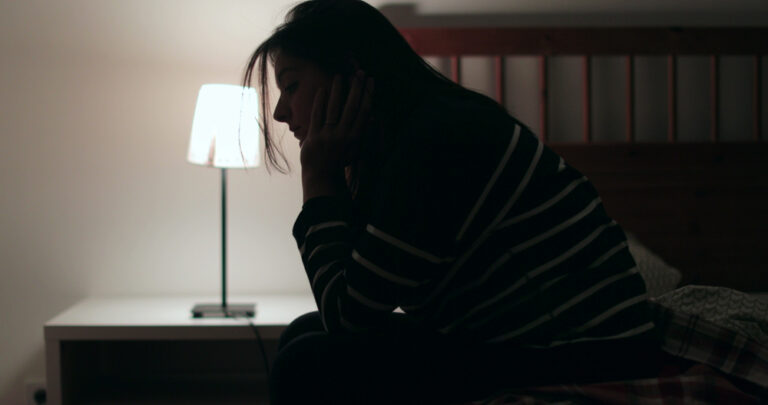


 by Desiree Fortin
 by Jennifer Vail