
The Sweetest Mother's Day Gift!

Two years ago my daughter got sick, really sick.

And nobody knew why. And when the doctors finally came to a diagnosis it was a chronic one. And my reactions were all over the map.

There was denial. “It couldn’t be! Were they sure? Maybe they weren’t her results.”

There was anger. “Why her? How did this happen? What about all the things she was supposed to do?”

There was bargaining. So much bargaining. “Please, let it be me. Let me do things over . . .”

There was depression. “How could I watch her suffer like this, forever? And how long was forever?”

Then, there was acceptance. “Forever would be what it would be, and we would make the most of it.”

In short, there was grief.

Don’t get me wrong, I was grateful for the information and thankful for each day I would still have my girl, but that didn’t stop me from mourning all the dreams I had for her, dreams that fell flat that day.

It wasn’t a streamlined process, but grief seldom is. It doesn’t follow a checklist, you know? It’s filled with ebbs and flows. I can’t even describe it as day-to-day, really. Maybe moment to moment.

I heard the diagnosis spoken. I held the test results in my hand. But I still wanted to think I could change it. I wanted to believe I would wake up and see her walking. I wanted to believe that maybe I’d get a second chance to read the words I once skipped in bedtime stories or tell her just how proud I was. Not of her accomplishments—but of her. Because of course I’d do it all different. And in those same moments that those feelings of helplessness and denial would drive me to bargaining I’d find the strength to carry on. And that strength was rooted in gratitude. Gratitude that for another day she was mine. And leaning into that involved acceptance. So somehow the whole process was intertwined.

It took some time, but I gained control of my emotions.

I let myself feel sorrow. And mourn the childhood I had wanted for my girl. It felt selfish, but I sat with that feeling, too. And day by day I was more present for her, as she was.

We had found our new normal.
It wasn’t what I’d planned, but there was joy in it all the same.

She wasn’t ok. And I wasn’t OK.
But life went on.

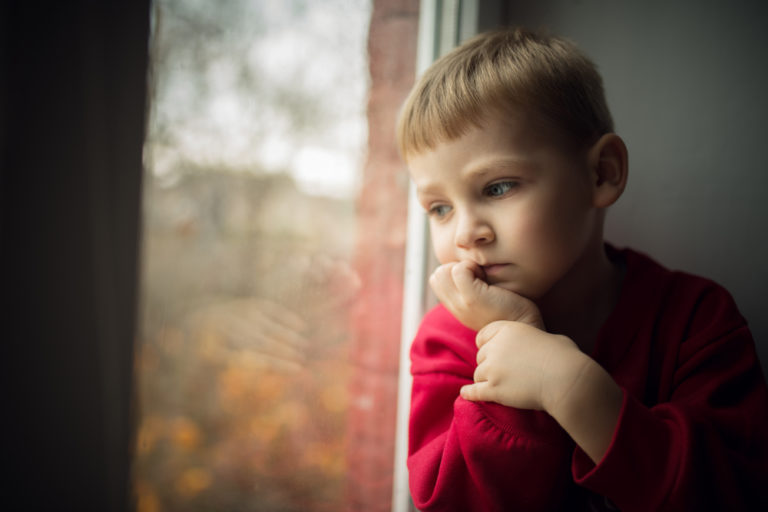
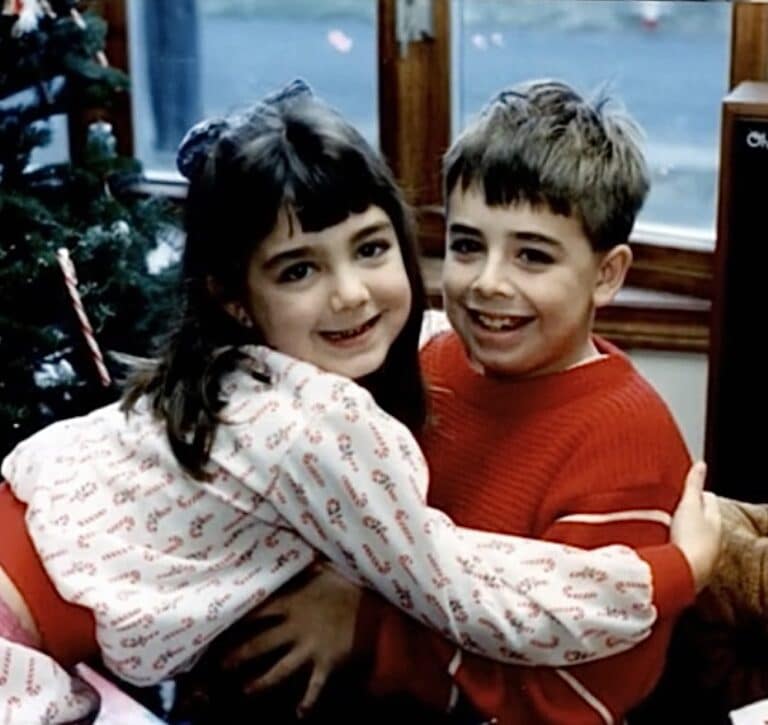
It went on, for her and me. But Gracie isn’t an only child. She has two younger brothers. Boys who lost their “big” sister though, confusingly, she was still present. And though I was grieving, I never thought to tell them it was OK for them to grieve, too.

Their hearts hurt, but I didn’t know.

I didn’t know until one day I told my youngest son he’d always be my baby. And my middle son solemnly asked if Gracie would always be my oldest. And without thinking, I said, “Of course.” And with tears in his eyes, he said, “Good because I never want to the oldest.” And at that moment, it hit me—the gravity of the situation had hit him. He was asking me if his sister would die. It was and remains a real possibility, but one I never told him he could say.

I wish I could say I recognized his grief at that moment and became the support he needed. But I didn’t.

I hugged him. And we went outside to play. The truth is I didn’t know what to do. And instead of doing something, I consciously did nothing.

A few months later my youngest was lying in bed beside me, and he said, “Last night I dreamed sissy could read to me again, do you think that could really happen, Mama?” And I heard his tiny plea. A plea to know what was happening and to hear that he didn’t have to be strong. And I told him, “We can hope so, buddy, but we never know.” I asked him if that made him sad, and he told me, “Sometimes, Mama.” And we sat with that.

We sat for a while in silence, his head on my chest. And finally, he said, “I miss Gracie, Mama.” And I said, “I miss her, too.” And there was more silence. Then he said, “I wish I had been nicer, Mama.” I promised he’d always been her favorite littlest brother. With a giggle, he replied, “I’m her only littlest brother” and turned on the TV.

I woke up that day.

I realized that as much as I struggled with Gracie’s illness, my boys did, too. I lost many of my dreams for her the day she received a diagnosis, but it had taken their big sister long before. There’s a pecking order to siblings, and theirs had been shaken up. Regression had taken their big sister. She was still in their lives, but the roles had changed. They were now her protectors.

And, by and large, they didn’t complain.

The compassion they gained and empathy they demonstrated came to amaze me.
When she lost her hair, her brother shaved his head, too. When she couldn’t walk, her other brother sat down on a skateboard and rolled across the driveway with her. When she was restricted to a bed, bound by tubes, they crawled up in bed beside her and read their favorite stories.

But resilient as they were, they were grieving.

They were going through the same process I was, with a lot fewer resources.
And in the throes of illness, living day-to-day, I never said, “We can be sad.”

Instead, I kept saying, “It’s going to be OK.”

In our family, our motto has become, “We can do hard things.” And I used to think that meant we could persevere through anything. And I think the kids did, too. And we can, kind of. But I’m learning that sometimes that means stopping, holding on to one another and recognizing that this is not fair, nor OK.

Life is hard. And so is grief. But together we can do hard things.

You may also like:

You Become the Advocate They Need When Raising a Child With Special Needs

Dear Sibling of a Child with Special Needs

Dear Sibling of a Special Needs Child, Your Heart is Full of Beauty

So God Made a Grandmother book by Leslie Means

If you liked this, you'll love our book, SO GOD MADE A GRANDMA

Order Now!

Cara Arnold

I’m a mama to 3 whose learning to balance parenthood and chronic illness at the hands of autoimmune encephalitis. Some days I’m a soccer mom, carpooling like a boss; other days I’m a relentless advocate, taking on doctors and insurance companies alike. But, if you’re looking for consistency every day I’m a hot mess. My life is a puzzle that’s still not together. I used to think pieces were missing. But it's all finally fitting together. It’s not what I envisioned, and some days I mourn that; but it’s mine. And knowing how fast that can change I try to appreciate every moment of it.

I Miss Having Parents

In: Grief
Grown daughter posing between smiling parents

I have been living with the ache of loss for so long that I truly don’t remember what it feels like not to carry it. Sometimes it rests quietly beneath my ribs, dormant and almost polite. Other times it rises without warning—on an ordinary Tuesday afternoon, in the middle of a coffee line—and cuts straight through me. Today, it was a song. I was waiting for my coffee when “Pictures of You” by The Cure drifted through the café speakers. I hadn’t heard it in 20 years. In my twenties, it meant heartbreak—young love unraveling, relationships ending before they were...

Keep Reading

What No One Tells You about Losing a Sibling

In: Grief

Nobody tells you that when you lose a sibling, your entire childhood flashes before your eyes. There’s no better witness to what you experienced growing up than that one person who was standing nearby for all of it. And when they’re gone, a part of that childhood and a part of that story goes with them, because it was only ever known between the two of you. There’s no last chance to say, “Remember when?” or to laugh about the things that made you laugh to tears together, a million times at the kitchen table. There’s no last conversation about...

Keep Reading

Grief Didn’t Break Me, It Rearranged Me

In: Grief
Sad woman looking off to the side

I survived losing my father after his long, grueling battle with cancer. It was one of the most difficult seasons of my life. I had a front row seat to watch cancer pick him apart piece by piece. When you lose a parent, you lose a part of yourself. They say time heals all wounds, but you never stop missing the good ones, and there are days when it feels like it just happened. By the grace of God, I survived, but I will always miss my father. Then, almost a decade later, I lost the career that helped me...

Keep Reading

I’m Learning To Be Soft and Strong

In: Grief
Woman sitting and crying on floor

During the weeks we cared for my grandmother in hospice, survival mode felt necessary. There were medications to track. Visitors to update. Logistics to manage. I remember sitting on the couch that served as my makeshift bed and listening to the rhythmic hissing and puffing of the oxygen machine one night. While my mom showered off the day, I texted my sister updates and sent my husband a quick message of love. I could still smell the lavender candle we had lit earlier in the day to mask medical scents. The house was quiet, but my mind wasn’t. I was...

Keep Reading

The Legacy Our Mothers Leave Is In the Details

In: Grief
Woman's hands holding beautifully wrapped small gift

It has been two months and nine days since my mom passed away. The first several weeks were spent on the details and logistics of planning her service. She passed in December, so once her beautiful service had passed, I busied myself with the preparations for Christmas. By mid-February, I finally began to process some feelings of grief on a deeper level. The quiet of this less-busy season is allowing the grief to soak in a bit more. Not the big things; not the obvious, grief-heavy reminders that stop me in my tracks. Instead, I’ve been noticing the small things....

Keep Reading

You Never Get Over Losing Your Mother

In: Grief
Woman and grown daughter smiling

It’s been 10 years since I last heard my mother’s voice. Ten years since I could pick up the phone and ask a question I already knew the answer to, just to hear her say it anyway. Ten years since someone loved me in that very specific, unconditional, occasionally annoying way that only a mother can. My mom died in 2015. And while “passed away” sounds softer, more polite, the truth is that she left. Suddenly. Permanently. With no forwarding address. She was gone. What I’ve learned in the decade since is not what I expected. I thought the biggest lesson...

Keep Reading

My Husband Is By My Side Through Every Storm

In: Grief, Marriage
Man with arm around woman's chair

The year 2025 began as a quiet storm. I was slipping into the fog of depression while navigating the early chaos of perimenopause, and some days simply getting out of bed felt impossible. My thoughts felt dark and heavy, my body unfamiliar, my energy nonexistent, and my moods uncontrollable. And yet, in the haze, there was one constant: my husband. He noticed the subtle shifts I barely acknowledged. The sighs, the quiet retreats into myself, the moments I almost broke. Instead of judgment or frustration, he offered presence. He held space for my struggle without trying to “fix” it, and...

Keep Reading

Losing My Mom Shaped Me As a Mother

In: Grief
Woman hugging young child, back view

Becoming a mother has a way of bringing old wounds back to the surface, even ones you believed had healed. I never imagined grief would surface so strongly in my motherhood journey. I thought it was something you carried silently, something that faded with time. But becoming a mother felt like my loss rising to its feet and saying, I’m still here There are moments when I reach for my phone to call my mom, only to be met with the reminder that I can’t. I want to ask her if what I’m feeling is normal, if the exhaustion softens,...

Keep Reading

Memories of My Grandma Live On

In: Grief
Glass fish sitting on window sill

Be intentional. Take the picture. Create memories. Because even when we think we have all the time in the world, one day it will slip away. Sadly, this is exactly what happened to my grandma and me. While I was growing up, my dad and his parents had a strained relationship, and they were estranged for about the first five years of my life. Thankfully, they reconciled, and my grandparents and I finally had the opportunity to establish a much-anticipated relationship. Though I was never able to form the same closeness with them as I had with my maternal grandparents,...

Keep Reading

Netflix Captured What I’ve Treasured for 17 Years: My Daughter’s Room Exactly How She Left It

In: Grief, Motherhood
Girl's bedroom with posters on the wall and toys on the bed

It was a Sunday evening. I was alone, scrolling through Netflix, searching for something, anything, to fill the quiet. Then I stumbled upon a documentary I had no clue existed, called All the Empty Rooms. After reading the description, my heart immediately went out to all the parents who contributed to this film, and to the man behind it, Steve Hartman, whose compassionate heart radiates in every frame. One statement he said hit me like a freight train: “What we need to talk about is the child that’s not here anymore.” Period. Powerful truth. Curiously, I started watching. Then I...

Keep Reading