
 By Ashleigh Spurgeon
The night my daughter woke up screaming at 3 a.m., I knew something was wrong.
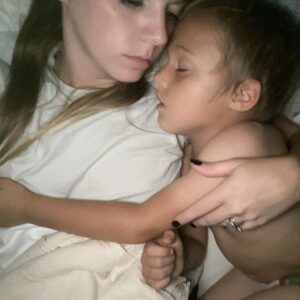
Her cry wasn’t the half-asleep whimper of a bad dream. Instead, it was pain—raw and sharp. Within an hour, we were rushing to the emergency room, the world outside our headlights still wrapped in darkness. Tests, scans, questions, and then the words no parent ever wants to hear: “We’re transferring her to another hospital by ambulance. She needs surgery right away.”
They said “torsion.” They said “tumor.” They said “appendix.” I nodded, because that’s what mothers do. We stay steady, even when our hearts are breaking open.
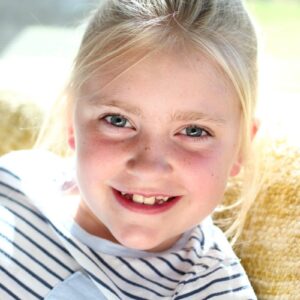
Savannah was just 18 months old when doctors first told us she had a rare genetic mutation called PTEN. It’s a condition that causes her body to form tumors—some harmless, some cancerous—and it gives her an 80 percent lifetime risk of developing cancer.
She’s nine now, with five surgeries behind her and a team of specialists who know her by name.
But this story isn’t about hospitals. It’s about faith.
Because if I’ve learned anything in the last nine years, it’s that parenting a medically fragile child means living between fear and faith — between the things we can control and the things we can’t, between trusting God and trembling anyway.
There is a unique kind of fear that comes with being your child’s primary witness to pain. It shows up in the small hours, when the monitors beep and your prayers blur together. It lingers long after the IVs are removed and the discharge papers are signed. It follows you into the grocery store, the school pickup line, the quiet moments when everything seems okay, but your mind is rehearsing what could go wrong.
For a long time, I tried to fight the fear. I treated it like an enemy—something I had to conquer, something that meant my faith wasn’t strong enough. But eventually I realized fear and faith aren’t opposites. They’re companions on this journey, two hands clasped in the same prayer.
Because when you’re raising a child with a fragile body and an uncertain future, faith doesn’t erase fear. It simply gives you somewhere to set it down.
Somewhere between those hospital nights and the ordinary mornings that followed, I stopped praying for guarantees and started praying for grace. I’ve prayed in parking lots and bathroom stalls. I’ve prayed over surgical gowns and waiting room coffee. I’ve prayed when I didn’t have words left—and somehow, that was enough.
Fear still finds me sometimes—in the middle of the night, or when Savannah winces in pain, or when I catch sight of another medical bill waiting to be opened. But faith finds me too. It reminds me I don’t have to see the whole road to keep walking.
I’ve learned to celebrate small things: the ordinary days between appointments, the laughter at the dinner table, the moments my daughter forgets she’s sick and just dances. I’ve learned life doesn’t have to be perfect to be precious. That joy and fear can coexist. That faith doesn’t make you immune to heartbreak—it just helps you keep loving through it.
Savannah has taught me to look for miracles in the mess in the way her laughter fills the room after pain, in the courage it takes for her to trust her own body again. Watching her grow has become my reminder that God’s faithfulness isn’t measured in outcomes, but in presence.
I used to think faith meant being unafraid. Now I know it means trusting God even when your hands are shaking.
My daughter still faces an uncertain road. There will be more surgeries, more scans, more sleepless nights when fear and faith meet again. But there will also be birthday candles, dance recitals, and family dinners full of laughter. There will be moments of joy so bright they drown out the darkness.
So I’ll keep walking this road between fear and faith—one step, one prayer, one miracle at a time.



 by Her View From Home
 by Jennifer Toscano
 by Tiffany Nardoni