
 By Erika Bradley
I often refer to that season of my life as walking through unspeakable pain. But it wasn’t until recently I realized it’s silence that fuels domestic violence.
My unspeakable pain is the very thing that keeps me from healing, from becoming whole. It’s our unwillingness as victims to share our stories, filled with what we view as shame, that keeps us in the isolation and captivity our abusers intended to be our coffins.
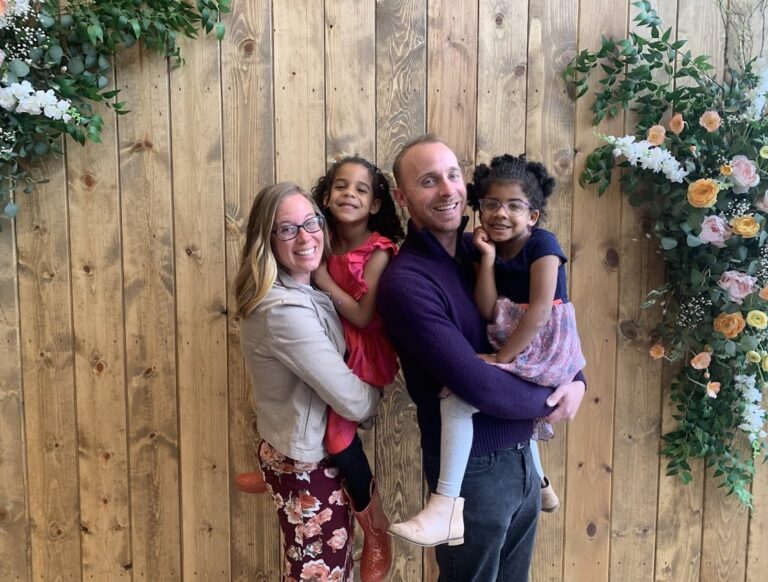
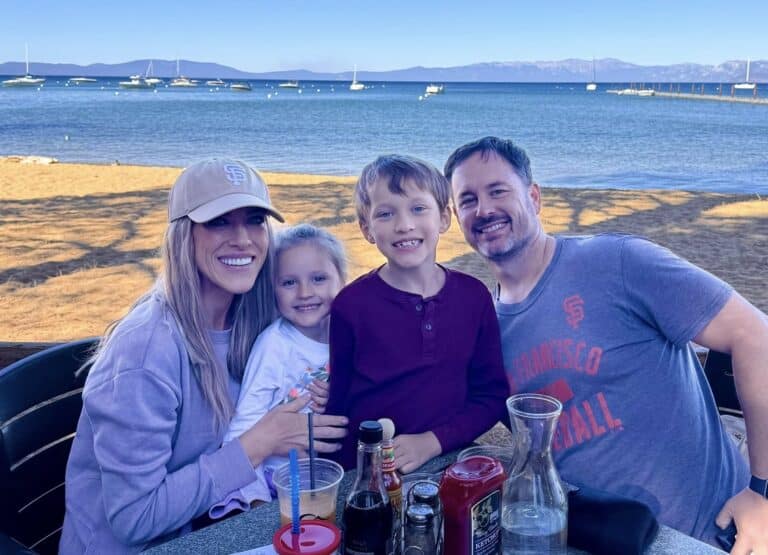
I will no longer solely defer to the image of the picture: perfect life, my beautiful kids and loving husband. That is not the complete story of hope. Today is my turning point. As I openly defy my status as a victim and choose to be a victor, I hope it inspires others to find the strength to do the same.
Waking up on a ventilator in early 2007 was the end for me.
As my eyes lazily attempted to focus on the image of my mother and father, from whom I had been estranged for months, a realization set in. At that same moment, I shuddered as my abusive husband reached across the hospital bed for my hand. Withdrawing from his grasp, I recalled the last exchange between us before I lost consciousness again.
“I will kill you before I go back to jail,” he said. The memory of being pinned against the wall in our 18-month-old son’s room while my baby screamed in fear flooded me despite the cloud of narcotics. Even with the pain of every slight movement, I could remember pleading with my abusive ex-husband two nights before as he struck me. Recalling that the only words I could think of as the blows came were, “Please stop, I don’t want you to go back to jail.”
You see, it was always about him. I was unimportant, unvalued, and insignificant. The bruises from my torso to my ankles proved that. He wouldn’t stop hitting me, not for me or the kids who witnessed the entire thing. It had to be for him.
RELATED: Domestic Abuse—The Part No One Talks About
Years later in a support group, I would learn most abusers share a narcissistic quality. The urge to always be in control, always be the center of attention, and always be viewed in a certain manner were certainly characteristics indicative of the Army National Guard soldier I had married barely a year before. We knew each other in high school and had reconnected when I wandered into his recruiting office as a young, desperate single mother.
It hadn’t always been bad.
There was even a point when I thought he could be my knight in shining armor, the answer to my prayers. But the reality of awakening to the beeping of machines meant to keep me alive was my wake-up call. Even as he leaned over and whispered, “You have to tell them you fell, that’s the only way we can be together,” I knew that choosing to stay would be a death sentence.
How had I let it get this far? I came from a loving, amazing dual-parent home, had a wonderful childhood, graduated with honors and was on the homecoming court. My childhood was the ultimate American dream. How had I become one of those women? You know the kind—the sad, desperate ones who let a man hit her . . . and stay?
The aspect of domestic violence that isn’t talked about enough is the verbal, emotional, and financial abuse that comes long before the first strike is ever dealt. He was great at keeping me down. Always letting me know I was failing as a woman, wife, and mother, telling me I wasn’t pretty enough, didn’t cook well enough, or his house wasn’t clean enough.
He was great at making me believe a little more every day I was as worthless as he treated me.
After we moved from the small town where we grew up to the other side of Atlanta, he was able to isolate me completely. I was isolated from everyone I knew. I had no friends, and my family didn’t even know where we lived. At this point, the hitting went from bad to worse. I wore sweaters during 80-degree weather and sunglasses when I picked the kids up from daycare to hide my bruises. I even resorted to sleeping during my lunch break at work because I was too terrified to fall asleep next to him at night.
That was my reality for the six months before the beating that almost took my life.
I didn’t know about the various family advocacy programs like Military OneSource that the military provides. And the National Domestic Violence Hotline (1-800-799-7233) didn’t exist. My abuser had alienated me from my friends and family, and I was sure they wouldn’t answer my pleas for help, not to mention the shame that would cover me if they did come to my rescue.
I knew that it was time to get out, but he almost denied me the ability.
He’s my husband, he would never really hurt me, I told myself.
It will get better, I said.
My kids need a dad, I argued.
I don’t want to mess up his military career, I reasoned.
He wasn’t always bad. Everyone else thought he was a great guy. Maybe it was me.
Maybe if I dressed nicer, cleaned better, kept the kids quieter.
Maybe if I cooked his favorite dinner.
Maybe if I got my education and a better job.
Maybe if he wasn’t so stressed and money wasn’t so tight.
These were all the reasons I gave myself to stay, ways I justified the fights over nothing.
Waking up in that hospital bed, I knew none of those reasons were good enough, and none of them were true. Abuse is statistically a learned behavior, with victims often becoming offenders. There was nothing I could do to help him. No dress pretty enough, no home-cooked meal good enough, no amount of cleaning or earning money would change his behavior.
RELATED: A Letter to the Abused Woman
There was nothing I could’ve done to prevent him from beating me in the side of my head with his fists until the hemorrhaging on my brain caused my body to seize so badly I was placed in a medical coma. Nothing I could’ve done that would prevent the sirens of paramedics arriving at our home that night. Nothing that would’ve kept my 4-year-old from uttering the words, “Mommy, I’m so glad you’re not dead,” when I finally woke up.
There was nothing but leaving.
Then I left—and healed.
Over the next few months, court proceedings, violated restraining orders, and sometimes just day-to-day life made leaving seem like the easy part. With each failure of the justice system to truly protect my children and me, the pain of that night would be relived. I was blessed to have the support of my amazing family and a few close friends during some of the darkest times of my life.
But even with horrible memories, nightmares, depression, and anxiety, the unrelenting fear I felt for my son, the emotional baggage I eventually carried into a new marriage, and the huge mountain I have had to climb to grace, forgiveness, healing, and wholeness, I am one of the lucky ones.
I got out. I’m not a statistic buried in the ground.
All of those horrible things he literally pounded into my brain, the ones I began to believe about myself were very difficult hurdles to overcome. I am blessed. I have had the chance to realize none of them are true, the chance to realize I am worthy of love that doesn’t hurt.
While healing, I rediscovered myself and finally learned what life and marriage can look like without domestic violence. I realized in that hospital bed there was nothing I could do that would keep him from killing me if there was a next time. That to choose help, to walk away, was to choose life.
My life matters, and so does yours.
Break the silence. Walk away while you still can.
If you or someone you know is experiencing domestic abuse, help is available. Contact the National Domestic Violence Hotline 24 hours a day, 7 days a week: 1-800-799-SAFE (7233)
Previously published on Military.com




 by Kristyna Moore



 by Chelsea Drown

 by Olivia Oster