


Editor’s note: This post discusses child loss
Child loss changes Mother’s Day. My 19-month-old, Julia, died suddenly on Mother’s Day in 2024. Three months later, her autopsy revealed she had B-cell Acute Lymphoblastic Leukemia (B-ALL, also known as SUDNIC). Julia died a week after we did an embryo transfer at an IVF clinic in an attempt to have a second child. We found out three days after Julia’s death that the embryo did not make it either. Six months later, we did another embryo transfer that succeeded, and I now have an 8-month-old daughter, Lucy Mei (“Mei Mei” means “little sister”).
I’ve wondered what to do with Mother’s Day. It is a busy day, even without trauma involved. There are many mothers to celebrate. Last year, we did a lunch for the women in our family, then sat around picnic tables and painted rocks to look like turtles, in honor of Julia. Julia loved turtles. We also gathered our closest friends the day before for a time of reflection and sharing. It was a rich time.
I’m not sure what we will do this year, or how I’ll feel. But I want to remember three truths I wrote about the night Julia died. They are the words I felt like I was hearing from God then, and I’ve found them to be particularly meaningful today. Perhaps they can be healing words for someone else too.
1. This is not your fault.
The three months following Julia’s death were exceptionally difficult, not only because of our grief but also because we did not know how she died. I racked my brain thinking of all the ways I may have overlooked something. But even before we had any answers, I felt God’s compassion for me.
I remember a day making pancakes with Julia. Julia kicked the plate of pancakes, and I reacted, saying, “No, no, no!” as the pancakes tumbled to the floor. I immediately realized my reaction was too loud, but it was too late. Julia was in tears. I squeezed her so tight and said, “Oh, my baby, this is not your fault. Mommy’s fault. Mommy’s fault. Not Julia’s.” She looked me in the eyes, comprehending what I was telling her. She took a deep breath and said, “Mommy’s. Fault.”
Julia’s death, the failed IVF attempts, years of infertility…none of that is my fault. I know we all may have different beliefs and understandings of God. My own faith has been confusing, to say the least, after Julia died. But every time I pray, I hear God using that same tone of compassion with me. “Not your fault, Kelly. Not your fault.”
After we learned Julia’s diagnosis, it became a little easier not to blame myself, but it is still easy to look at other moms who have healthy, thriving kids and feel like I failed at being a mother. I couldn’t keep my child alive. I have to regularly tell myself I did not fail and I am not less than other mothers.
2. You are, eternally, a mother.
The night Julia died, as I still wondered if I was pregnant, I wrote, “I don’t know if I can ever trust myself as a mom again.” But I needed to be reminded that I would never stop being a mom, even if I never got pregnant again. I was Julia’s mother as I waited for her birth. I was her mother as she was here with us. I was her mother as I held her to sleep for the last time. And I am still her mother, as I keep her gravestone clean and plan leukemia awareness walks and teach her little sister her favorite songs. I still have lots of questions about life after death, but I believe motherhood is eternal. I will never stop being Julia’s mom.
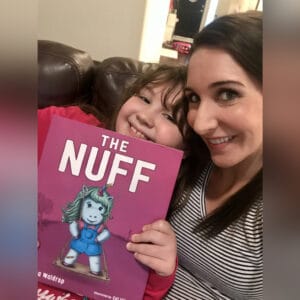
I am learning to trust myself more as Lucy’s mom too. There have been many “firsts” to get through: the first time Lucy got sick; the first time I took her in the shopping cart; the first time I read her some of Julia’s books. Each of those firsts has been exceptionally hard. My husband and I wrote a book in honor of Julia called “Julia the Great Tries Again.” It’s a simple picture book about Julia needing to “try again” as she learns to walk and go down slides. Sometimes I look at Lucy and can’t believe I dare to do this again. There has been something deposited in me that comes from outside myself that allows me to keep being a mom, even after so much trauma.
3. It’s okay not to know how to do this.
I don’t know what to tell my friends about this year. I don’t know if I even want to acknowledge the day. I don’t have any creative ideas stirring within me. But I think that’s okay.
The night Julia died, I thought about all of my memories of becoming a mother. I had no idea what I was doing. I didn’t know how to feed her or how not to spiral into anxiety every time she didn’t take a nap on time. I didn’t know what I was doing when I took her to the doctor that last day and held her in my arms. But I have a great teacher. Even though I’m still not sure what I think about God right now and why He didn’t answer my most desperate prayer, I am still experiencing him as my teacher. He taught me how to be a mother then, and He’s teaching me how to be a mother now.
This Mother’s Day may not be worth posting about on my social media accounts. I may have no insightful words to write. I might be grumpy or angry or depressed or happy or sick. I don’t know how I will feel. But that’s okay. I’m not sure any of us know how to do this—but I think that’s a really normal part of motherhood.
These are the truths I’m hanging onto this Mother’s Day.
Originally published on Just Enduring


 by Shelby Skiles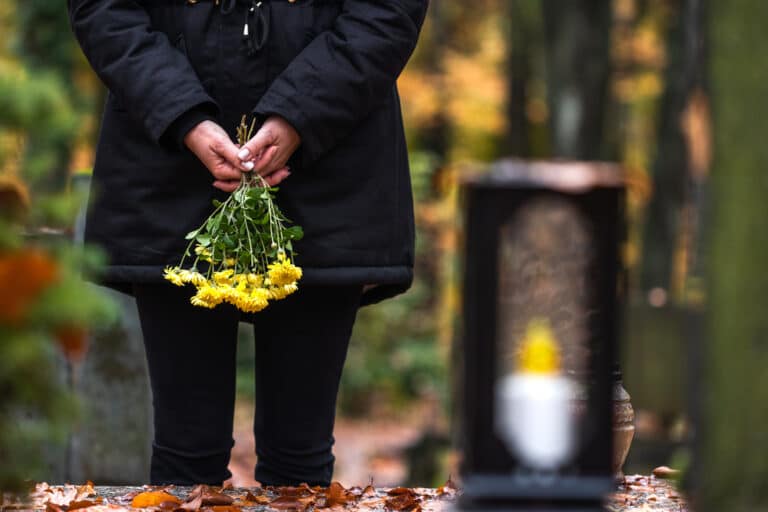


 by Kara Helton